Canada says anti-greenwashing law prevents industry from ‘speaking up’
Canada says anti-greenwashing law prevents industry from ‘speaking up’
Prime Minister Mark Carney’s government says it’s paring back parts of Canada’s anti-greenwashing law after hearing from fossil fuel companies and other groups that their “good-faith efforts†to protect the environment are going unadvertised.
The changes, , are meant to address what his government says is a “trend†of companies staying silent about their environmental efforts out of fears of running afoul of the law, according to a statement sent to from Innovation, Science and Economic Development Canada.
is when about the eco-friendliness of their products or actions, making their environmental stewardship appear greater than it is. Lawmakers added the anti-greenwashing provisions to the federal Competition Act last year in part to of companies advertising that they were headed toward net-zero emissions while not presenting evidence showing they were taking any significant steps toward cutting their carbon pollution.
But now, the government believes companies are “withholding information that could aid in attracting investment for green innovation,†a departmental spokesperson said. Carney’s budget the anti-greenwashing law, brought in under former Prime Minister Justin Trudeau, was leading to “some parties slowing or reversing efforts to protect the environment.â€
When asked by The Narwhal, the federal department couldn’t name any specific examples of companies slow-walking genuine environmental efforts as a result of last year’s legal changes, which deal specifically with marketing unsubstantiated green claims rather than environmental action itself.
One expert says any legal risks are being massively exaggerated. Wren Montgomery, cofounder of the and professor at the Ivey Business School at Western University, believes awareness of how to comply with the law is already fairly widespread — and the companies still complaining may simply for their lack of climate action.
“The only lawyers I’ve heard complain about it are the lawyers actually working in these corporations,†Montgomery said. “So it seems either just that [corporate lawyers] are too thinly spread, and don’t really understand competition law or sustainability reporting very well, or that they’re using it as an excuse.â€
The government’s remarks come on the heels of a Nov. 16 released by Clean50, a collective of sustainability leaders, and signed by 144 of its members in business, academia, politics and the environmental sector calling on Carney to do more to tackle the climate crisis — including reversing plans laid out in the budget to dismantle some of Canada’s anti-greenwashing rules.
The letter states that it’s the Carney government’s proposed changes to the law, rather than the law itself, that will undermine investor confidence and harm Canadian entrepreneurs who had already adapted to the changes.
“Renewed greenwashing can distort competition and act as a barrier to entry to genuine green firms or drive them from the market,†the letter reads.
It also comes as Canada to combat climate disinformation, committing to “equitable access to accurate, consistent, evidence-based and understandable information on climate change.â€
The Carney government’s concerns about the law revolve around a requirement for businesses to back up their environmental claims with evidence that conforms to for calculating a company’s carbon footprint.
The budget argued the requirement to adhere to internationally recognized standards, as well as another rule allowing private individuals or organizations to bring greenwashing complaints before a tribunal, were “creating investment uncertainty†and “having the opposite of the desired effect.†It proposed getting rid of both rules, while keeping the base requirement for businesses to substantiate their environmental claims.
The federal Competition Bureau, which enforces fair competition in the marketplace, says deceptive marketing about environmental efforts can lead to a distorted playing field where Canadian consumers make with their money. A spokesperson for the Competition Bureau said they were aware of the Carney government’s proposed changes to the law, but declined an interview request from The Narwhal.
In Canada, voluntary disclosure standards for including environmental risk in financial statements, , refer to a framework called the . Other jurisdictions, like the United States, have put in place that green claims be grounded in evidence from relevant scientific fields or verifiable criteria.
In June, the bureau for organizations navigating Canada’s anti-greenwashing rules, saying it would accept any carbon accounting standard recognized in at least two countries.
Montgomery said consultants and lawyers who have been working on sustainability reporting have told her they were already aware of what green accounting standards to use, or were already incorporating them into their work. She said it was important to stick to internationally recognized standards because of the risk of the industry that could prove dubious.
The government has the option of strengthening the law, Montgomery and other greenwashing experts have , instead of repealing parts of it. Ottawa could change the language around the use of standards, the experts said, such as removing the “international†requirement or specifying precisely which standards to use.
Suspending the third-party right of action until those changes were made, rather than canceling it permanently, would be a way to provide clarity without stripping away the law’s purpose, they added.
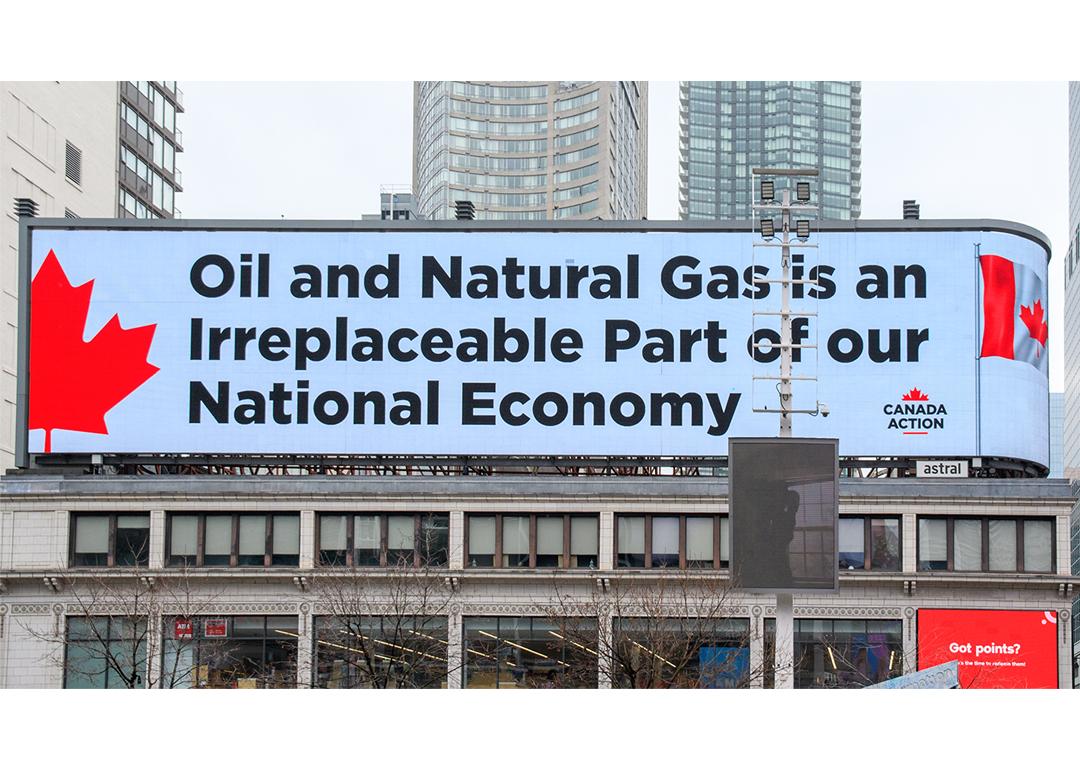
The government’s concerns over uncertainty in the law echo complaints lodged by large oil and gas companies in Canada last year, many of which said the anti-greenwashing provisions had and that the requirement to adhere to the standards in presenting their information was “vague†or “overreaching.â€
The Narwhal asked the office of Industry Minister MĂ©lanie Joly if it could name any examples of companies or organizations that were slowing or reversing genuine environmental efforts as a result of the law.
A departmental spokesperson, AndrĂ©a Daigle, responded that the government had heard from “numerous stakeholders across various sectors of the economy†that they felt unable to report on environmental achievements but did not discuss the impact of those efforts.
The fossil fuel industry, as well as other businesses, civil society and government-run groups, had “regularly raised what they and their legal counsel considered an unacceptable risk in making public statements†when it was unclear what standards to use for backing them up, Daigle said.
“This has resulted in a trend   of withholding information that could aid in attracting investment for green innovation and informing consumers about good-faith efforts,†she said.
The goal of paring down the law was to “ease fears of heavy enforcement that could discourage companies from speaking up, while ensuring they remain accountable for showing their claims are genuine.â€
Last year, an official at Environment and Climate Change Canada told the Competition Bureau that “uncertainty†around the anti-greenwashing law “†in encouraging companies to voluntarily adopt net-zero commitments under a
At the same time, the department said it was “reasonable†to expect companies to come up with an environmental plan backed by “credible elements†that includes carbon accounting “based on international methodology,†as required by law.
Others at the time said the law seemed fine. The Canadian Renewable Energy Association, for example, said it supported the rules and would Ҡthe adoption of the Greenhouse Gas Protocol as the internationally recognized standard of choice.
In a 2024 survey by Angus Reid Forum, commissioned by Greenpeace Canada, agreed companies should face penalties for making unproven environmental claims.
“The only other thing which Canadians have supported by that margin was preferring the Jays over the Dodgers,†Clean50 executive director Gavin Pitchford said in a statement.
was produced by and reviewed and distributed by șÚÁÏÉç.