Oscar-winner Steve McQueen on the flowers that outlived empire
Oscar-winner Steve McQueen on the flowers that outlived empire
Steve McQueen was nine years old when he first saw the flowers of Grenada.
It was 1979, and he had traveled from London with his mother and sister to visit his grandfather. For many Caribbean families in Britain, especially those who arrived during the postwar Windrush migration, home remained anchored across the Atlantic in the islands their parents had left behind. 鈥淐oming from London,鈥� McQueen told , 鈥渢here was always this thing of going home, wherever our home was.鈥�
For McQueen, that journey marked his first vivid encounter with a landscape that felt at once familiar and entirely new. 鈥淲hat was interesting for me was just the burst of color,鈥� he recalled. 鈥淭hese plants were so prominent. It was just so vivid. One could say it was coming from black and white into color because everything was so visually alive.鈥�
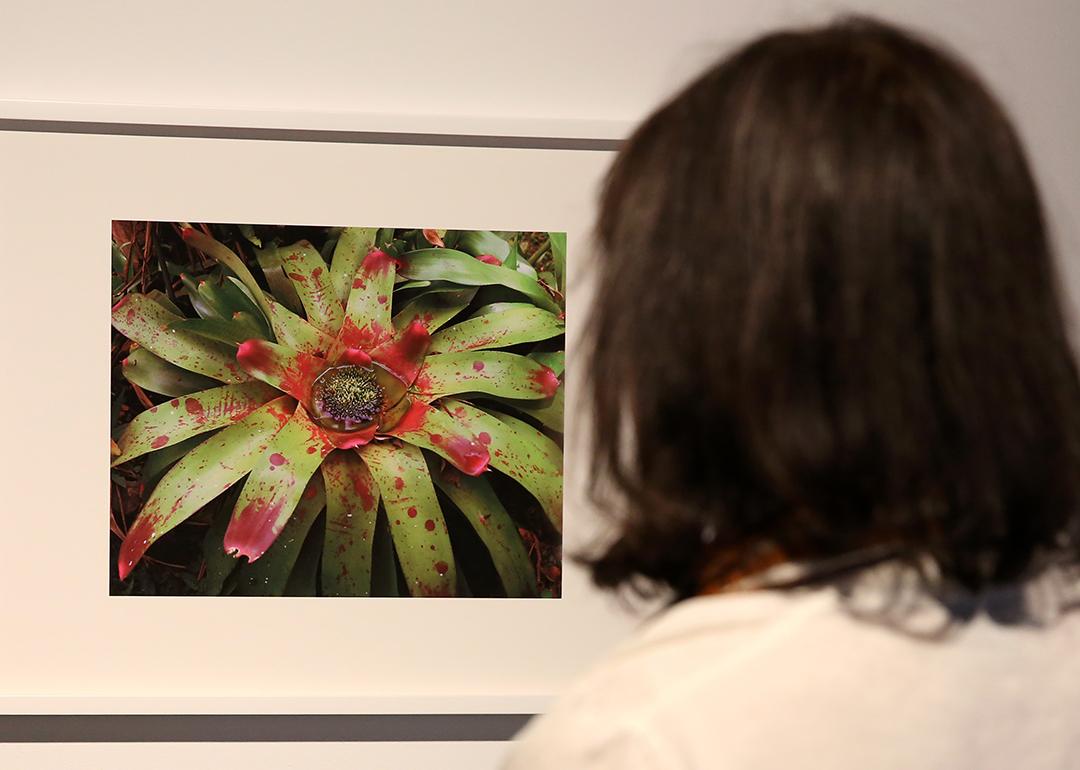
That first impression stayed somewhere deep within him, emerging unexpectedly decades later as the foundation for 鈥�,鈥� McQueen鈥檚 latest photographic book documenting the flowers of Grenada, published by . The book uses Saint Lucian poet Derek Walcott鈥檚 elegy to his mother, 鈥淭he Bounty,鈥� as a literary touchstone, and opens with an introductory text by Dionne Brand鈥攖he award-winning Trinidadian Canadian writer鈥攖hat reads the Caribbean landscape as a living record of colonial violence and survival.
McQueen鈥檚 images make a gentle first impression. Flame lilies, wax mallows, and parrot鈥檚 beak flowers grow along roadsides or inside gardens. But the flowers also carry the dense weight of Grenada鈥檚 past. 鈥淭hese plants are witnesses to history,鈥� he said. 鈥淭he flowers are the constant in this land of flux.鈥�
That history is one of layered migrations and violent upheaval. The island was first inhabited by Indigenous Arawak peoples, who were later displaced by Caribs before European colonization began in the 17th century. The French, then the British, fought for control of the land, establishing . After the abolition of slavery in the 19th century, indentured laborers arrived from India and other parts of Asia.
Over centuries, the island became a crossroads of empire and diaspora where Indigenous, African, European, and Asian histories converged on a small stretch of Caribbean land. 鈥淭he West Indies has always been a place of flux,鈥� McQueen said. 鈥淎ll these worlds met in this one territory.鈥�
His own entry point into that history came through a project called 鈥淐aribs鈥� Leap,鈥� which took him to Sauteurs in northern Grenada. The site marks a devastating moment in 1650 when Indigenous Carib people, facing defeat by French colonizers, leapt from the cliffs rather than surrender.
鈥淭here are countless atrocities that come with colonialism and the disempowerment of a people,鈥� McQueen said. 鈥淏ut what was interesting for me [during this trip to Grenada] were the flowers. I imagine an Arawak, a Carib, a European, an African would each have looked at those same plants and experienced a moment of wonder.鈥�
McQueen has been returning to the afterlives of empire for much of his career as a filmmaker and artist. In directing 鈥�12 Years a Slave,鈥� which won three Academy Awards, including Best Picture, he traced the brutal architecture of slavery through one man鈥檚 experience of captivity. In 鈥淪mall Axe,鈥� his film anthology about London鈥檚 West Indian community, McQueen turned to the everyday realities of racism, migration, resistance, and belonging in postwar Britain. And in 鈥淩esistance,鈥� the , he brought together works that examined anticolonial struggle and the many forms power takes.
鈥淏ounty鈥� belongs to that same wider inquiry, but approaches it through a different register. Flowers, plants, trees, and rocks carry a duration that exceeds the timescale of nations and empires. They decenter the human, and with it the colonial habit of treating land as property or resource. Instead, they return us to a deeper temporal frame, one in which human life appears as part of a longer, shared planetary story.
That shift in perspective can root people more fully in the world they inhabit, and with it comes a sharper sense of what deserves care and value. It also makes room for reverence. As McQueen put it, 鈥淭hese flowers are some of the most beautiful things you could think of. But they serve no purpose鈥攖hey are there to be admired, to be looked at, to reproduce, to wither and die, and to come again. The promise of renewal. That鈥檚 it.鈥�
That鈥檚 not to say their beauty is apolitical. It is inseparable from the land they grow in, and from the human histories that land has carried. 鈥淭he only thing I could think of was to photograph them in their natural environment,鈥� McQueen said. 鈥淭he context, the land, the soil were very important.鈥�
That decision marked an intentional departure from the tradition of botanical archives, which tend to isolate plants from the systems they belong to. McQueen spent time researching plant collections at where centuries of imperial botanical exploration are stored in cabinets and folders. Pressed flowers and branches from voyages dating back to Captain Cook lie flattened on paper sheets. 鈥淚t was extraordinary to see these things,鈥� he said. 鈥淭here was something very analytical, something very formal about them. There was that kind of sterile categorization.鈥�
In that setting, the specimen becomes an object of study first, a living presence second. For McQueen, the plants needed their landscape. 鈥淭hey had to be in context.鈥�
That commitment to holding beauty and history in the same frame is how 鈥淏ounty鈥� places emotional climate storytelling at its center. In these photographs, the flowers become part of a larger story about land and liberation. They bloom alongside histories of colonial exploitation and revolutionary aspiration. And they remain in place as human systems rise and fall.
鈥淛ust because you feel that it looks innocent doesn鈥檛 mean that it is,鈥� he said. 鈥淣othing鈥檚 innocent. A flower in a vase, a half-cut orange, a presentation of food. Nothing鈥檚 innocent. It鈥檚 all about a certain kind of framing, and who is framing it. Once you go outside that frame and you put the context in鈥攖hat鈥檚 when you begin to understand what you鈥檙e really looking at.鈥�
This is the deeper achievement of 鈥淏ounty.鈥� The book slows the viewer down long enough to see flowers as part of a longer record of land and its politics. They are lush, radiant, and fleeting. They are also among the few presences that have remained as generations of people arrived, were displaced, enslaved, colonized, resisted, and rebuilt their lives. 鈥�,鈥� McQueen reiterated. 鈥淭hey still are.鈥�
was produced by and reviewed and distributed by 黑料社.