The 10 most watched cities in America, and what that means for privacy
The 10 most watched cities in America, and what that means for privacy
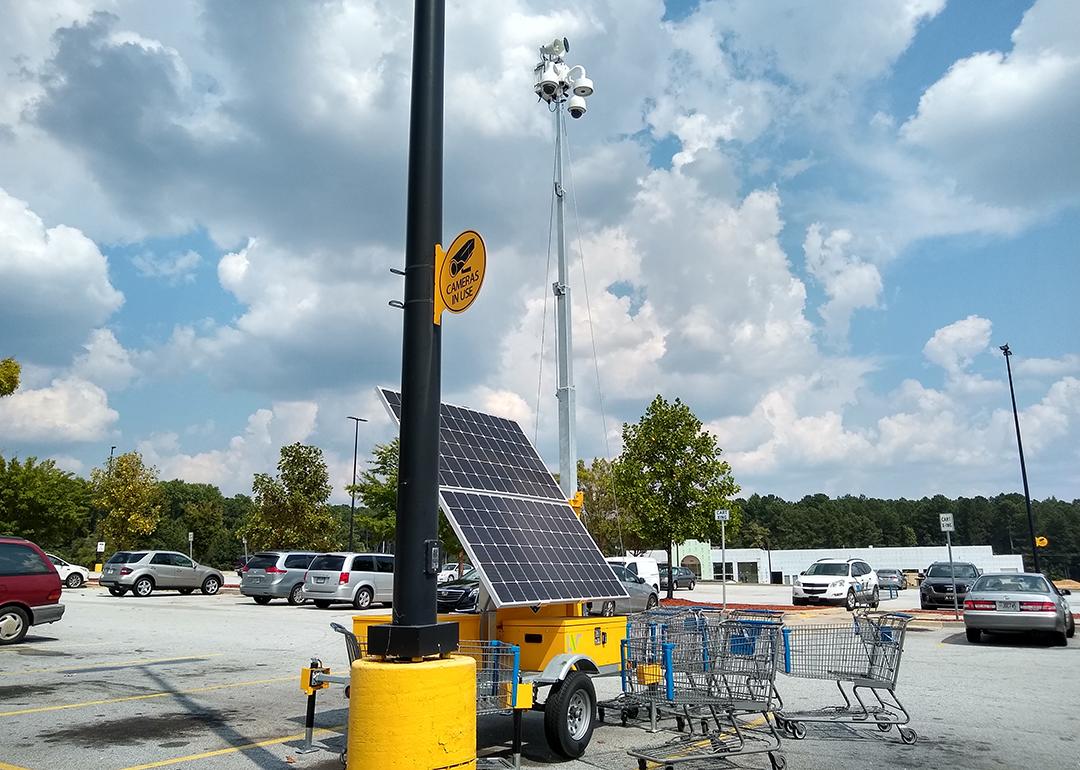
In the past, when people thought about security cameras, they usually associated them with places like airports, casinos or high security government buildings. Over the last decade, this has changed, and now, cameras are everywhere.
As cities try to improve safety, the number of surveillance cameras across the U.S. has grown dramatically. Walk through any city in the U.S., and the chances are you鈥檙e being recorded 鈥� not just once, but countless times.
According to research from , nearly 537,000 cameras operate across the 50 largest U.S. cities 鈥� averaging about 11 cameras per 1,000 residents. Some cities far exceed that average.
But as camera growth continues, so do questions about privacy and data protection. In this article, dives into the issue of surveillance, privacy, and data protection.
Below are the by camera density, taken from Comparitech鈥檚 latest research.
- Atlanta, Ga. 鈥� 124 cameras per 1,000 residents
- Washington, D.C. 鈥� 55 cameras per 1,000 residents
- Philadelphia, Pa. 鈥� 31 cameras per 1,000 residents
- San Francisco, Calif. 鈥� 25 cameras per 1,000 residents
- Denver, Colo. 鈥� 20 cameras per 1,000 residents
- Chicago, Ill. 鈥� 19 cameras per 1,000 residents
- Albuquerque, N.M. 鈥� 17 cameras per 1,000 residents
- Detroit, Mi. 鈥� 17 cameras per 1,000 residents
- Las Vegas, Nev. 鈥� 16 cameras per 1,000 residents
- Memphis, Tenn. 鈥� 14 cameras per 1,000 residents
The privacy impact: safety, surveillance and the governance gap
The growth of surveillance in our cities isn鈥檛 just about the scale 鈥� it鈥檚 about the concentration.
In cities like Atlanta, where density is 1, residents are statistically far more likely to be recorded multiple times during a short walk through the city.
Cities increase their camera counts for a reason. Law enforcement agencies believe that CCTV systems help deter crime and supply crucial evidence that can speed up investigations. In many states, video footage now plays a huge role in identifying suspects and resolving violent incidents.
For businesses and residents, visible surveillance can also increase feelings of safety in public spaces.
But civil liberties groups warn that the main concern isn鈥檛 that cameras exist, but more about how footage is stored, shared, and retained.
The American Civil Liberties Union (ACLU) says facial recognition technology can allow tracking of people everywhere they go, describing the case of a man arrested in front of his family because of .
Meanwhile, the Brennan Center for Justice talks about how police are using an increasing 鈥渁rsenal of surveillance鈥� often without proper oversight. Their reporting on shows how using these tools can erode public trust when policies are not disclosed or made clear.
What these groups warn is that the real risk isn鈥檛 just the cameras themselves, it鈥檚 what states do with the data once it鈥檚 been collected. In the U.S., there isn鈥檛 one unified surveillance privacy law; rather, states vary widely in how they regulate things like footage retention periods, access controls and data sharing, biometric analytics use and more.
When a city has a high density of cameras the challenge intensifies. More cameras produce more data. More data increases both investigative capability 鈥� and potential exposure 鈥� if policies are weak or poorly enforced.
The debate, ultimately, isn鈥檛 surveillance versus safety. It鈥檚 whether public safety initiatives like video surveillance are matched with safeguards to protect public trust.
was produced by and reviewed and distributed by 黑料社.