Should you stay or should you go? SoFi survey on why people switch auto policies
The rising cost of car insurance prompts people to think about making a change, but perhaps not as often as you鈥檇 expect, according to SoFi鈥檚 Spring 2026 Auto Insurance Survey.
Car insurance premiums in the United States have gone up more than 55% since 2020. So it wasn鈥檛 too surprising that, in the survey, conducted Jan. 23-26, 2026, most of the 787 participants (61%) reported recent increases in their rates.
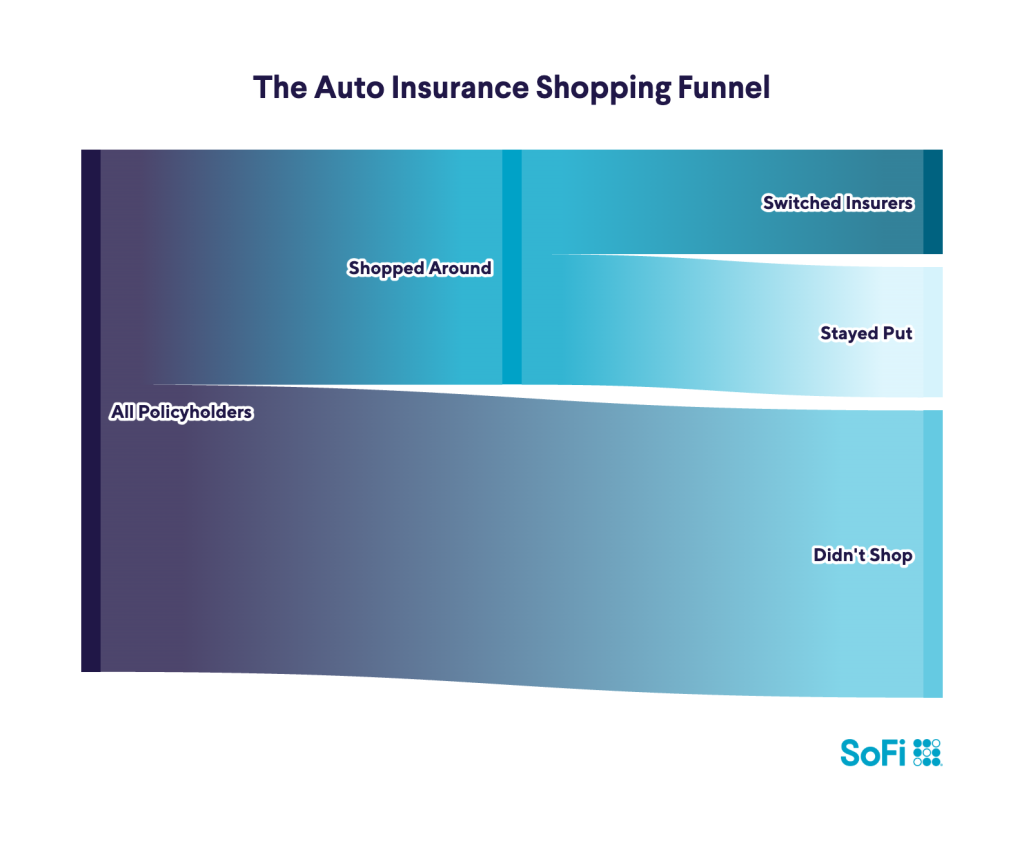
Yet only slightly over half (55%) of those policyholders went on to shop for new car insurance.
The other 45% didn鈥檛 bother to seek out a different insurer. Many called the process too time-consuming and inconvenient, while others said that unbundling auto coverage from home or renters鈥� policies would be too difficult.
With enough price pressure, though, policyholders overcame that friction. Among people who reported 鈥渟ignificant鈥� hikes without a 鈥渃lear reason,鈥� the share of shoppers jumped to 71%. Among all respondents, almost half (48%) said they鈥檇 switch for an annual savings of $250 or less.
Ultimately, 47% of those hit with higher rates did change insurers. What made them shift gears? Why did others stay parked? In this article, dives into the survey data to shed some light on policyholders鈥� often surprising decision-making.
Key Points
- Despite facing higher premiums, only 55% of affected policyholders shopped for new insurance.
- Almost 4 in 10 (38%) active shoppers checked to see if they were currently overpaying, while 33% were motivated by significantly higher premiums at renewal time.
- Friction in the switching process kept many from changing insurers, as 53% said potential savings weren鈥檛 worth the hassle, and 13% found the process too complicated.
- One in 5 respondents switched policies. Among those who scored lower rates, 63% saved between $100 and $500 in their first year.
Most Satisfied Policyholders Don鈥檛 Shop
The largest share of non-shoppers (38%) is satisfied with existing car insurance coverage. Most of these satisfied non-shoppers (63%) also say standing pat is the best long-term strategy 鈥渇or better rates and service.鈥�
One in 5 (20%) non-shoppers explained that they didn鈥檛 expect to find a rate lower than their current one. As for strategy, 44% of them think that customers get better rates and service by staying with one company, but 31% shrug that 鈥渁ll companies are the same,鈥� so 鈥渋t doesn鈥檛 matter.鈥�
Another 19% of non-shoppers said they simply weren鈥檛 willing to spend the time or deal with the 鈥渉assle鈥� of the process, regardless of the possible outcome.
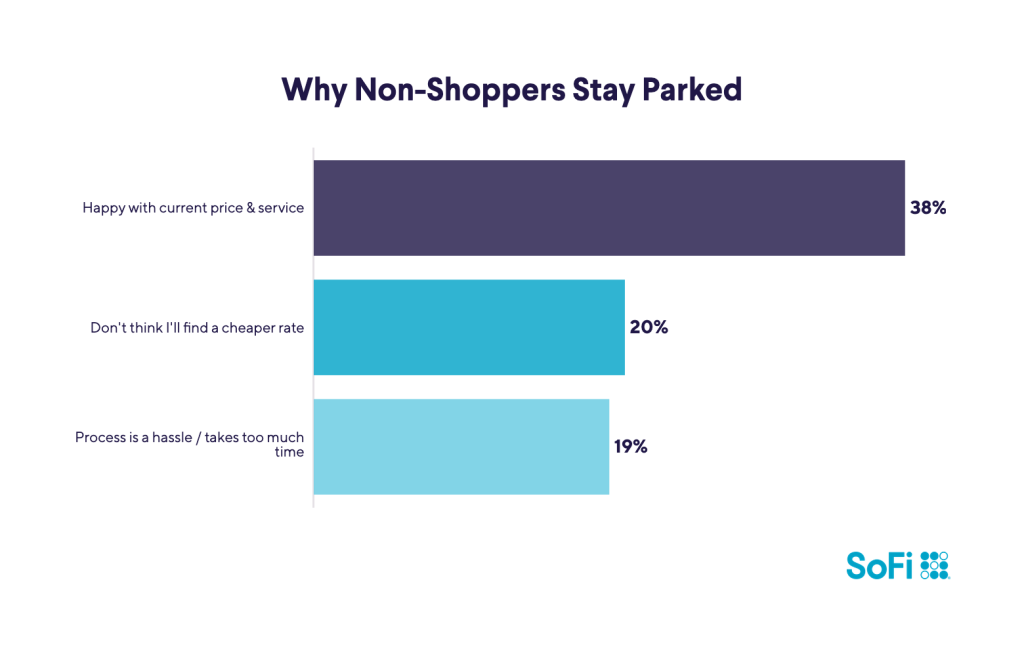
Top three reasons that people didn鈥檛 shop:
- I鈥檓 happy with my current price and service. 38%
- I don鈥檛 think I鈥檒l actually find a cheaper rate. 20%
- The process is too much of a hassle or takes too much time. 19%
45% Shop, But Most Still Don鈥檛 Switch Policies
On the other side of the coin, the 45% of survey respondents who within the preceding year did it for the money.
Roughly 2 out of 5 (38%) shoppers were checking to see if they were currently overpaying. Significantly higher renewal premiums motivated one-third (33%) of shoppers.
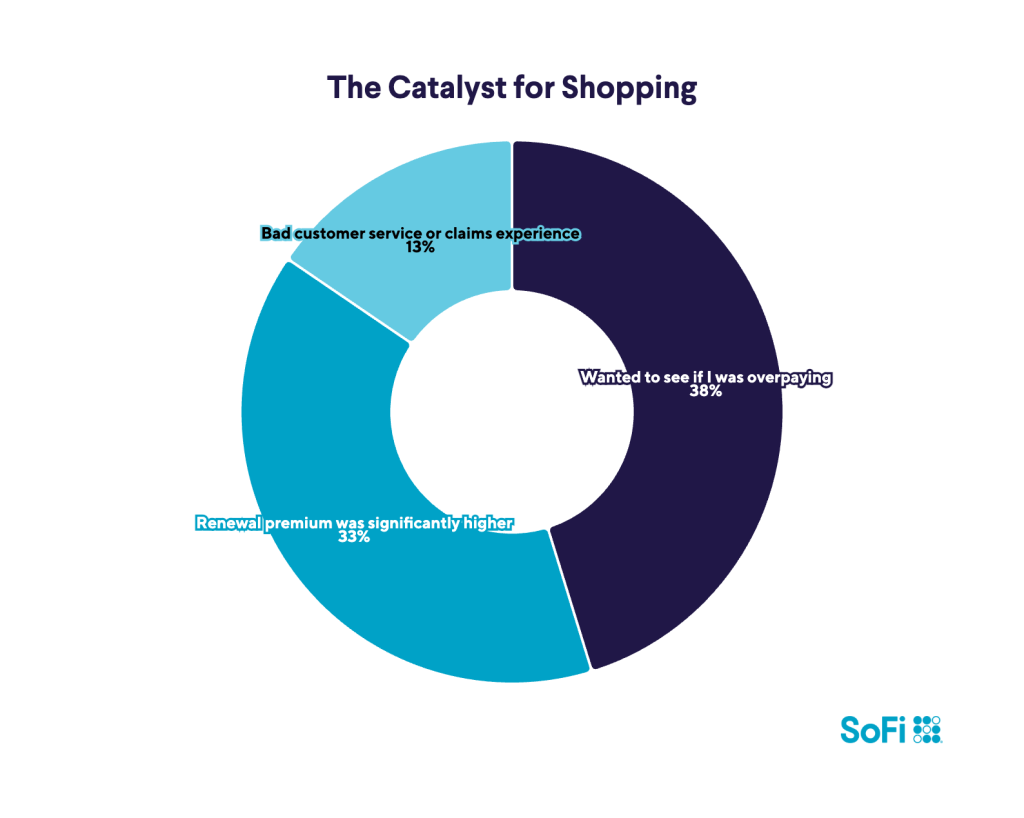
Top three reasons that people shopped:
- I just wanted to see if I was overpaying. 38%
- My renewal premium was significantly higher. 33%
- I had a bad customer service or claims experience. 13%
When gathering information and comparing rates, more than 4 out of 5 shoppers (82%) solicited quotes from online sources. Almost half of shoppers (46%) used online comparison sites to see multiple quotes; most of those people stayed put, by a margin of 53% to 37%.
By contrast, shoppers who either contacted a local agent (14%) or sought out the websites of a few specific carriers (36%) 鈥� that is, people who applied more effort and focus to the task 鈥� were noticeably more likely to switch. The margins were four and nine percentage points, respectively.
Why Shoppers Stay Put
In the end, only 44% of shoppers (equal to 20% of all respondents) switched their car insurance, while 56% opted to remain.
Roughly two-thirds of shoppers who stayed put (66%) did so because of friction in the process. Most (53%) explained that the potential savings weren鈥檛 worth the hassle of switching, while another 13% found the switching process 鈥渢oo complicated.鈥�
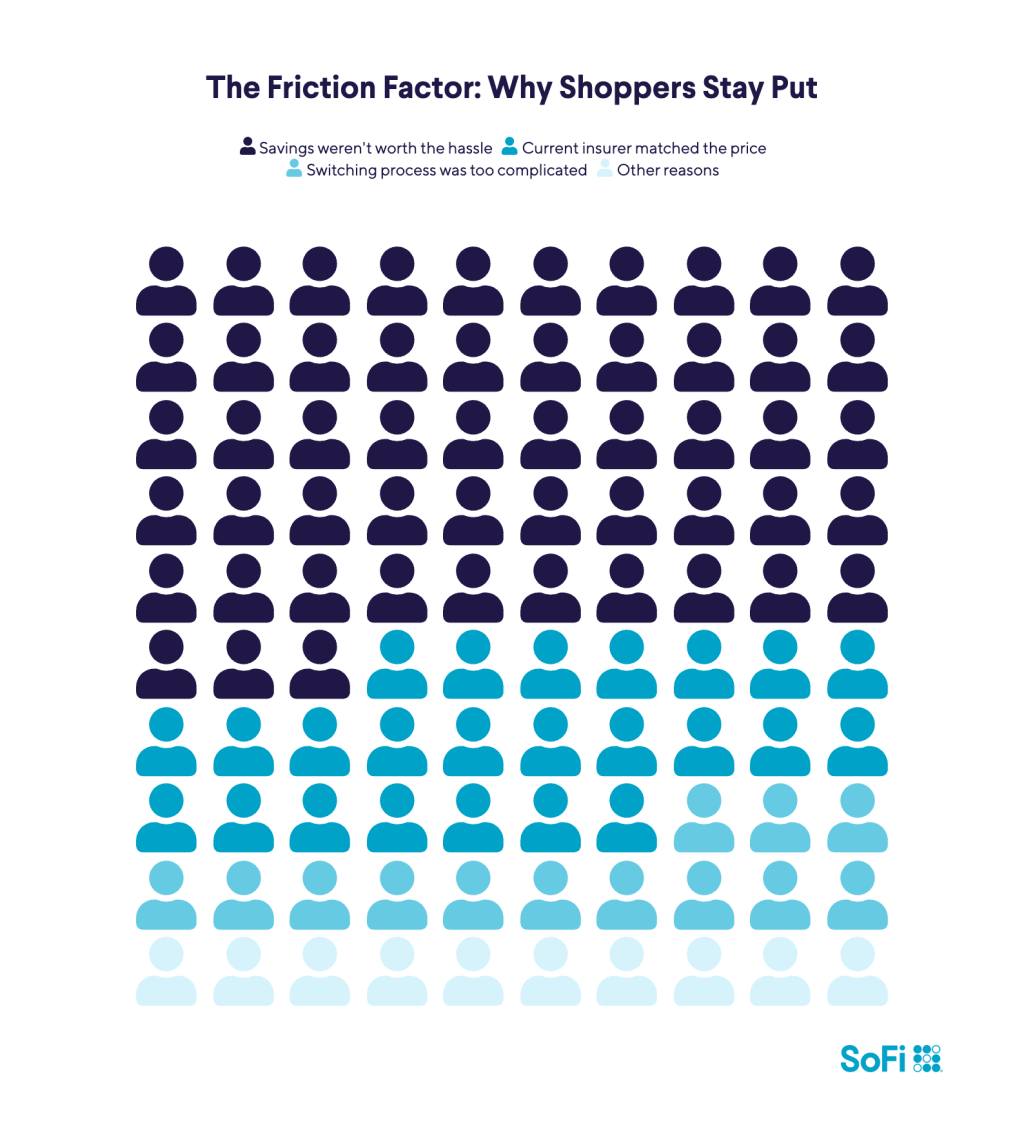
Top three reasons why those who shopped didn鈥檛 switch:
- The savings I found weren鈥檛 big enough to be worth the hassle. 53%
- My current insurer matched the price to keep me. 24%
- The process to complete the switch was too complicated. 13%
What鈥檚 Trust Got to Do With It?
A large majority of respondents (90%) have no beef with their insurers. Almost two-thirds (64%) say they trust their insurers 鈥渃ompletely鈥� or 鈥渟omewhat鈥� to proactively provide them with the best rates and all qualifying discounts. An additional 26% describe themselves as 鈥渘eutral鈥� 鈥� meaning that 9 in 10 respondents believe their insurers aren鈥檛 gouging them.
And yet high levels of trust don鈥檛 necessarily prevent people from shopping around.
鈥� Almost two-thirds of those who shopped (65%) expressed trust in their current insurers; among non-shoppers, the percentage was almost identical (64%).
鈥� Almost half (46%) of policyholders who trust their insurers 鈥渃ompletely鈥� or 鈥渟omewhat鈥� shopped anyway.
This is also the case among low-trust policyholders. Ten percent of respondents professed distrust in their insurers, but only about half of those folks (54%) bothered to shop for better rates.
How Much Savings Would Motivate a Switch?
What鈥檚 the trigger point for change? More than one-quarter of all respondents would make the leap for an annual savings of $250. This suggests that the potential reductions that shoppers find in the marketplace are far smaller than that.
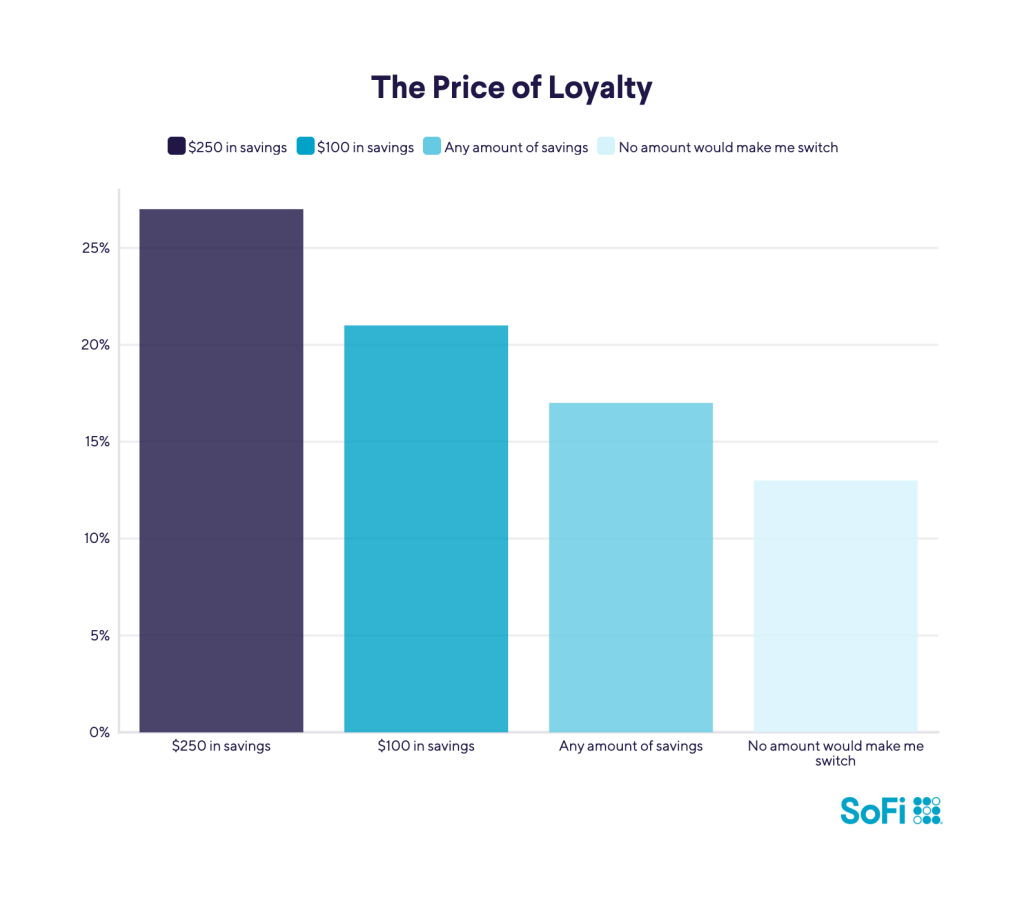
- 27% say saving $250 would be enough for them to switch insurers.
- 21% say saving $100 would be enough.
- 17% say saving any amount would be enough.
- 13% say no amount of money would cause them to switch.
Trust Takes a Back Seat to Savings
More than one-quarter of respondents (29%) trust their insurer completely. But for savings of $500 or less, a large majority of them (73%) would switch. For $250 or less, more than half (56%) would switch. And 14% would switch for any amount of savings at all.
Almost two-thirds of respondents (64%) say they trust their insurer 鈥渃ompletely鈥� or 鈥渟omewhat.鈥� Eighty percent of them would switch to save $500 or less.
Savings Doesn鈥檛 Tell the Whole Story
Among all respondents, about one-fifth (21%) reported that their premiums 鈥渨ent up significantly鈥� without 鈥渁 clear reason.鈥� The vast majority of them (71%) shopped, and 57% of shoppers switched.
Of the shoppers facing significant increases who nevertheless stayed put, fully half said that the savings they found weren鈥檛 鈥渨orth the hassle鈥� of switching. One in 5 reported that their current insurers kept them as customers by matching their potential savings.
But expectations also played a role. Of the plurality of shoppers (41%) who said their renewal premium 鈥渨ent up slightly,鈥� which they expected, most (60%) did not switch insurers.
Roughly 3 in 10 respondents (29%) said their renewal premiums stayed the same or went down. Among this group, about two-thirds (64%) kept their current policies. Most of those who switched found substantial savings, with 74% saving more than $100 annually.
Switchers鈥� Actual Savings
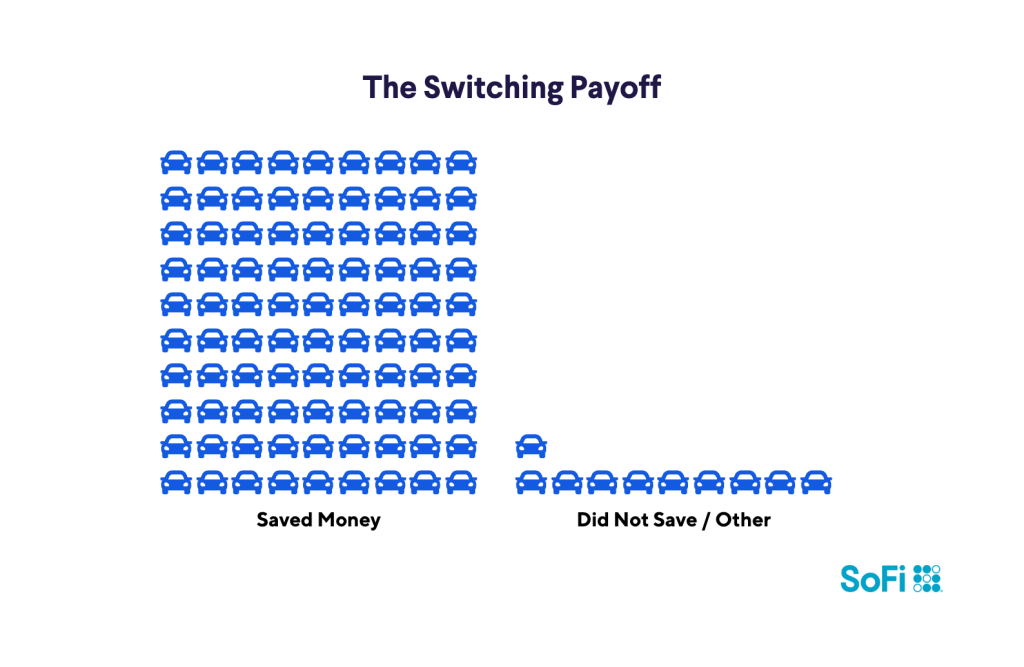
In the end, 44% of shoppers (20% of all respondents) made a change. More than 90% of the switchers saved money as a result. Among those who scored lower rates, 63% saved between $100 and $500 in their first year.
The Takeaway
The SoFi Spring 2026 Auto Insurance Survey reveals a significant gap between rising costs and consumer action. Despite a 55% surge in premiums since 2020, 45% of affected policyholders failed to shop for better rates, primarily citing 鈥渉assle鈥� and complexity. Surprisingly, 90% of respondents maintain high trust in their insurers, yet 80% would abandon that loyalty for savings of $500 or less. For those who did switch, the rewards were tangible: 90% saved money, with 63% reducing their annual costs by $100 to $500.
was produced by and reviewed and distributed by 黑料社.