Four years after Supreme Court ruling, more candidates repay campaign loans with post-election cash
Four years after Supreme Court ruling, more candidates repay campaign loans with post-election cash
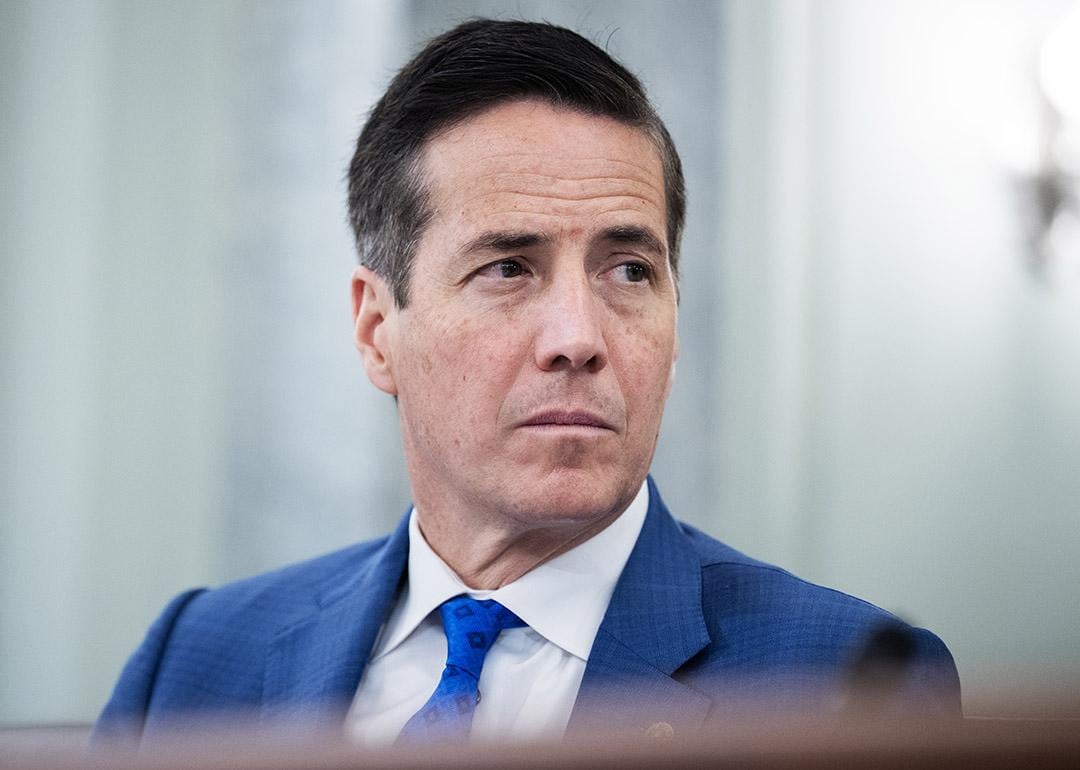
When Bernie Moreno ran for Senate in 2024, he . Just over a year after taking office, the Ohio Republican鈥檚 campaign paid him back $1.25 million using money it received well after the election 鈥� a transaction that only a few years earlier would have been prohibited.
In the four years since the Supreme Court struck down the cap on loan repayments and the 20-day post-election window tied to it, federal candidates have increasingly used money raised after Election Day to reimburse themselves long after voters cast their ballots.
Before the court鈥檚 2022 ruling in , candidates could repay no more than $250,000 in personal loans with post-election contributions, and only within 20 days of the election. The court鈥檚 conservative majority eliminated those restrictions, a shift experts say has encouraged larger and more frequent self鈥憀oans. In this article, examines the impact to date of this change.
鈥淚t hasn鈥檛 been a case without consequence,鈥� John Martin, an election law scholar and assistant professor of law at Quinnipiac University who , told OpenSecrets.
While federal contribution limits strictly cap how much outside individuals can give to a campaign, there is no federal limit on how much of their own personal wealth candidates can pour into their own runs for office.
So far, candidates seeking House and Senate seats in the 2026 midterm elections have poured at least $203 million of their own money into their campaigns, according to an OpenSecrets analysis of FEC campaign finance reports through the first quarter of the year. Personal loans account for at least $182 million 鈥� nearly 90%, a level experts say would have been far less likely when repayment was capped and time鈥憀imited. Seven such loans were worth apiece, FEC records show.
Martin said found the average self-loaning candidate loaned the campaign nearly 40% more money during the 2024 election cycle than in 2020, before the Cruz decision. The inflation-adjusted 2020 average of nearly $354,000 climbed to nearly $495,000, he said. Similarly, median self-loans grew from an inflation-adjusted $22,000 in 2020 to about $25,000 four years later.
The practice is likely to become even more widespread, said Dan Backer, the in a separate Supreme Court campaign finance case. In the 2014 case , the court struck down federal aggregate limits on individual contributions per election cycle, allowing donors to give to an unlimited number of candidates, party committees and political action committees as long as they adhere to base per-candidate limits.
鈥淟oaning yourself money doesn鈥檛 annoy donors and voters, and no one has experienced political pain from repaying them, either,鈥� Backer told OpenSecrets in an email. 鈥淚t鈥檚 legal, donors and voters don鈥檛 care, and it鈥檒l keep happening.鈥�
Proponents of self-funding argue it makes candidates less beholden to donors. Critics say the opposite, noting that donations made after an election may wind up in the candidate鈥檚 own bank account.
鈥淲hat many candidates decide to do is actually loan that money to their campaign committee, and then that opens up the opportunity to use third-party donations to pay that money back,鈥� Martin said. 鈥淪o, donors have remained a part of even self-funded candidates鈥� campaigns 鈥� an integral part, especially if those candidates are self-loaning.鈥�
That dynamic creates ethical concerns, said Ciara Torres-Spelliscy, a Stetson University law professor who studies election law.
鈥淭his type of financial rescue is likely to curry favor with the impacted elected official,鈥� Torres-Spelliscy told OpenSecrets in an email. 鈥淎nd unlike most campaign money, this repays personal loans that the candidate lent their campaign, so the money goes back into the official鈥檚 pockets.鈥�
To illustrate that point, Martin described a hypothetical example of a donor contributing $2,000 to a self-loaning candidate鈥檚 campaign.
鈥淭hat candidate can take that $2,000, and they鈥檙e not going to put it towards traditional campaign expenses, like funding their staff or paying for advertising,鈥� he said. 鈥淚nstead, they could take that $2,000 and directly funnel it back into their bank account, potentially with an interest rate attached to it. So they could actually make money off of their self-loaning.
鈥淪o the relationship that forms between the donor and a self-loaning candidate has the potential to actually create a heightened risk of corruption because that money, I could just take it and funnel it into my personal bank account,鈥� he added.
While most candidates don鈥檛 charge their campaigns interest on those loans, Backer cautioned that could change, 鈥渁nd that might be something donors/voters dislike as much as candidate salaries.鈥�
The Cruz case centered on a provision of the Bipartisan Campaign Reform Act of 2002 requiring that any amount above $250,000 not repaid within 20 days be treated as a contribution. A day before the 2018 general election, Cruz , Ted Cruz for Senate. The campaign repaid him $250,000 after the 20-day window closed, leaving $10,000 that converted into a contribution. The committee , arguing the limit deterred candidates from loaning money to their campaigns and violated the First Amendment. In a in May 2022, the Supreme Court agreed.
The essence of the ruling, Martin said, is that 鈥渋f you limit the amount of money that they could use to pay back their self loans, then suddenly, they might not loan themselves as much money as they鈥檇 like to, and therefore they won鈥檛 be able to engage in as much advocacy as they might like.鈥�
The repayment road map
In the immediate aftermath of the ruling, OpenSecrets found that reinstated previously converted loans so they could use post-election contributions to repay them. Martin referred to that in 2020, roughly 12.6% of self-loaning candidates loaned their campaigns above the $250,000 limit. In 2024, that rate climbed to 18.6%.
Now, four years after the court鈥檚 ruling, Moreno provides a clear example of how the post-Cruz landscape works.
Moreno loaned his 2024 Senate campaign in four installments, starting with an interest-free on Sept. 30, 2023. That was followed by three six-figure checks in early 2024 totaling $1.5 million 鈥� loans backed by personal at a rate that would be due in early 2025. While FEC records list the source of the funds as his 2022 committee, Bernie Moreno for Ohio, the agency as personal candidate loans. Moreno , starting with $3 million on Sept. 30, 2021, before dropping out of the race.
In March 2024, Moreno won the Republican primary and then unseated Democratic incumbent Sherrod Brown in November. On Jan. 20, 2026 鈥� a year and 17 days after he was sworn in 鈥� the Bernie Moreno for Senate campaign $1.25 million for those primary loans.
That repayment money could not have come entirely from the campaign鈥檚 leftover election funds because it ended 2024 with just under 鈥� far short of the amount it ultimately repaid. Since the start of 2025, however, FEC records show has flowed into the campaign鈥檚 account. align with that figure, showing net receipts of roughly $1 million that reflect the loan repayment and other offsets.
Since January 2025, the campaign鈥檚 largest 23 receipts were transfers of amounts ranging from $15,000 to nearly $184,000 from Team Moreno, his joint fundraising committee. Between May 7 and Dec. 31 of that year, the campaign received totaling more than $1.3 million from that committee. The campaign鈥檚 FEC records show 18 of those transfers, which total more than $960,000, include memo lines referencing 鈥渄ebt retirement鈥� 鈥� either for the 2024 campaign or for his 2022 Senate bid.
A bipartisan trend
Moreno is far from alone. The Cruz ruling has reshaped candidate behavior across the country.
Rep. Brandon Gill (R-Texas) between December 2023 and February 2024. The campaign ended 2024 with in cash on hand. After the election cycle reset, the campaign took in and for those primary loans across three payments between July and October 2025.
Before he stepped down in March to serve as Trump鈥檚 secretary of homeland security, former Sen. Markwayne Mullin (R-Okla.) won a special election in 2022 to succeed Sen. James Inhofe (R) after his mid-term retirement. Mullin on . He won the special election that November, and the campaign ended the year with .
The following spring, he . FEC records show the Mullin For America campaign 鈥� which reported nearly during the 2024 cycle and through the first quarter of 2026 鈥� the full $1 million for those 2022 primary loans in six payments between April 2023 and Dec. 31, 2025. Of that total, $595,149.21 was repaid during the 2024 cycle with the remaining $404,850.79 coming during the 2026 cycle.
Democrats have used the mechanism as well. Former Rep. Wiley Nickel (D-N.C.) in between June 2021 and October 2022, then won the election that November. After ending 2022 with , the campaign during the 2024 cycle while repaying for those primary and general loans across seven payments in 2023.
After his district was redrawn, he did not seek re-election. Instead, he and , also , during the 2024 cycle. His Senate campaign reported about in cash on hand at the end of that year and brought in nearly $590,000 more during the 2026 cycle. Nickel dropped out of the Senate race in July 2025 and pursued local office. Weeks later, the campaign made the first of for those 2022 and 2026 primary loans, totaling $539,000.
OpenSecrets reached out to the candidates, either directly or through their campaigns or offices, for comment but did not immediately receive any responses.
was produced by and reviewed and distributed by 黑料社.