Senate Ag Committee set to spare this animal welfare law, for now
Senate Ag Committee set to spare this animal welfare law, for now
The Senate is readying to strip the controversial from a farm bill that would鈥檝e barred states from setting animal housing requirements for farmers to participate in interstate commerce.
For now, Senate Agriculture Committee Chairman John Boozman, R-Ark., is likely to release a farm bill in June that does not contain language addressing Prop 12, Progressive Farmer reports. Boozman declined a request for comment. But senators have the option to introduce an amendment to reinsert the language during the farm bill markup, and several sources say a number of issues, including the bacon provision, are currently up for negotiation.
The pork industry has been divided for almost a decade over a , that set animal welfare standards for sows, veal calves and egg-laying hens. The issue has pit hog farmer against hog farmer.
鈥淚t鈥檚 a dividing issue, for sure,鈥� Brent Hershey tells . Hershey is a Prop 12-certified farmer and owner of Hershey Ag. He has traveled from Pennsylvania to Washington, D.C., on at least five occasions to speak to lawmakers. 鈥淚t鈥檚 terrible, and it is absolute civil war in the pig industry.鈥�
The House farm bill that passed in April contained the Save Our Bacon Act to limit the scope of Prop 12 to California鈥檚 borders, but for now the provision appears to be too controversial to overcome the Senate鈥檚 filibuster.
The Save Our Bacon Act would bar states or subdivisions from establishing conditions for the sale or consumption of any livestock that isn鈥檛 physically raised in that state. This would effectively nullify the housing standards established by California鈥檚 Prop 12 and similarly, Massachusetts鈥� Question 3, for producers outside of the state.
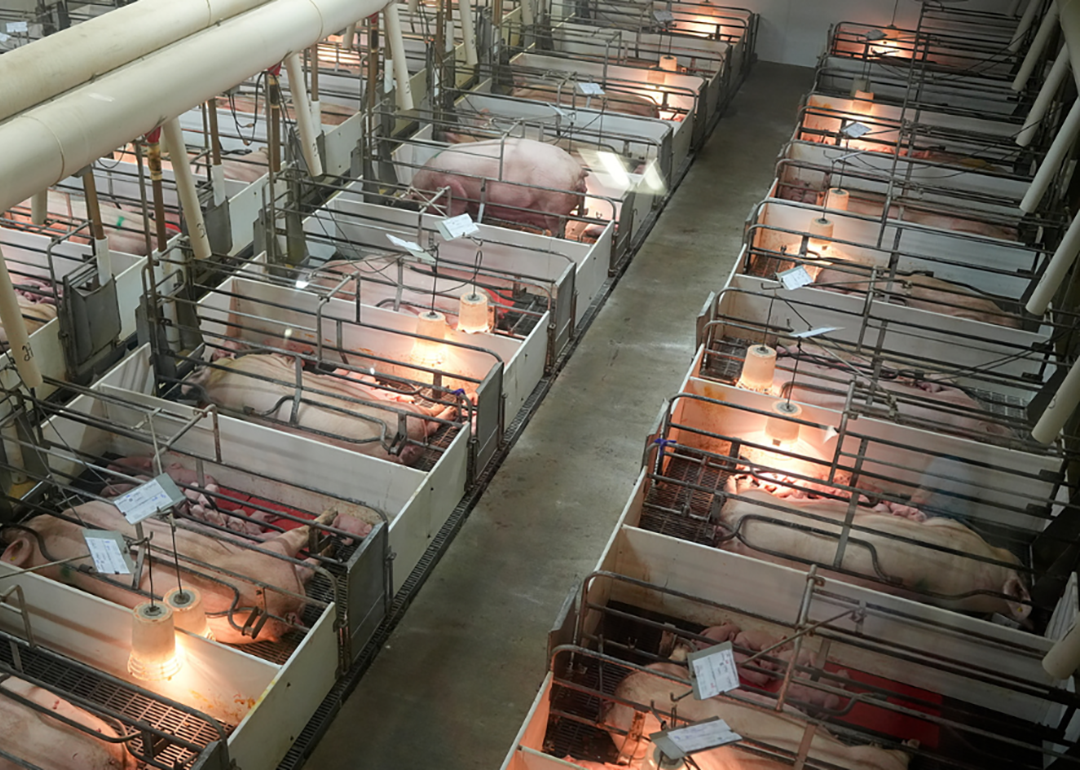
The California law effectively bans for pregnant sows. The crates are metal stalls that are about 7 feet by 2 feet and are barely bigger than an adult pig. Prop 12 requires pork products to come from a pig born to a sow raised with at least 24-square-foot space. This allows for enough room to turn around in the enclosure. It also set standards for veal calves and egg-laying hens.
Kara Shannon, director of farm animal welfare policy for the ASPCA, tells Sentient that consumers support humane systems for animals. Both Prop 12 and Question 3 were voter-approved ballot measures.
鈥淲e know the animals really suffer in those conditions, and we have made so much progress moving them out of those cages and crates into cage- and crate-free environments, so if we pass Save Our Bacon Act, it really is effectively putting many of them back in cages,鈥� Shannon says.
A found that 83% of Democrats, 77% of Republicans and 80% of Independents say that preventing animal cruelty is a matter of personal moral concern. A representative for ASPCA pointed Sentient to the poll.
Senate Agriculture Committee ranking member Amy Klobuchar, D-Minn., writes in an email that Prop 12 is still being negotiated.
The move has caused upset among Iowa Republicans.
鈥淲hile liberal activists who鈥檝e never set foot on a farm try to regulate bacon out of business with arbitrary and heavy-handed mandates, I鈥檓 fighting to make sure the voices of the farmers and experts who know best are heard,鈥� Sen. Joni Ernst, R-Iowa, writes in an email.
Sen. Chuck Grassley, R-Iowa, similarly opposes Prop 12 because it 鈥渙verstepped constitutional boundaries and effectively hogtied pig farmers across America,鈥� he said in a March press release.
The National Pork Producers Council (NPPC) tells Sentient they remain hopeful that the Senate will reverse course and include the bacon act provision, and they anticipate Ernst will continue to support their efforts.
鈥淧ork producers are understandably disappointed to hear that Senate farm bill language may not address the longstanding issues with California鈥檚 arbitrary sow housing law that they have so plainly spelled out to our congressional leaders for years now,鈥� NPPC writes in an email.
The NPPC has been a driving force in the battle to include the bacon provision. In one Senate lobbying disclosure report for the first-quarter of 2026, NPPC reportedly spent $260,000 lobbying on various issues including the Save Our Bacon Act and the 2026 farm bill.
In an April letter to Congress, NPPC and almost 400 organizations argued that Prop 12 can increase barn costs for farmers by 25% to 40% and operating costs per pig by 15%. A fact sheet by the House Agriculture Committee says producers could face costs upwards of $4,500 per sow to construct Prop 12-compliant facilities, and it will disproportionately harm small- and medium-sized producers.
Hershey disputes this claim. He built a new barn that cost about $800 per sow and shrank his herd at another facility from 1400 to 1000 to make space, which cost him about $300 per sow. In all, Hershey says it represented a $2 million investment.
鈥淏ut we took that and spread that out over 10-year payback, and it came out to costing us like $4 a pig to do it for every pig produced, and that represents about 1% increase in operating costs, because what happened then after we transitioned is our pigs started doing better, so that was a big surprise,鈥� Hershey says. He adds that herd health improved and conception rates increased.
If the bacon provision is enacted, Prop 12-certified pork producers will lose access to a new market during a time when farm country is financially struggling. Farm bankruptcies increased , the American Farm Bureau Federation reports.
Holly Bice, the president of the American Meat Producers Association, tells Sentient that Prop 12 farmers will be 鈥渇inancially devastated鈥� if they lose Prop 12. Approximately 27% of U.S. pork producers are or are working to become compliant with Prop 12, according to the USDA.
鈥淎merican farmers have already adapted to and embraced Prop 12, and to take that away now would just upend over a quarter of the hog industry, and cause a destabilization in the market,鈥� Bice says.
Hershey is among those who have embraced Prop 12. 鈥淚t鈥檚 been an opportunity for us, and it鈥檚 been a success for us, and this would take it away. It鈥檚 awful,鈥� he says, in reference to the small family farmers who have become Prop 12 compliant.
The bacon provision could also have implications outside of the pork industry. An analysis by Harvard Law found that if the bacon language is enacted, hundreds of state and local laws and regulations could be nullified. It could impact states鈥� abilities to control the spread of pests and diseases like New World screwworm and avian influenza.
Lawmakers have been trying to insert language similar to the Save Our Bacon Act into the farm bill since 2014, prior to Prop 12鈥檚 enactment. Previous attempts have been unsuccessful. Sen. Cory Booker, D-N.J., writes in an email that he will fight to keep the bacon provision out of the farm bill.
鈥淟aws like California鈥檚 Prop 12 and Massachusetts鈥� Question 3 reflect the widely held belief that farm animals deserve to be treated more humanely,鈥� Booker says. 鈥淭he House Farm Bill鈥檚 attempt to erase these protections would punish the thousands of farmers who have made the financial investment to provide more space for their animals.鈥�
Booker is not alone in his support of Prop 12 and Question 3. Nearly a year ago, 32 senators sent a letter to leadership on the Senate Agriculture Committee in opposition to efforts to essentially repeal those laws. Booker was among the signatories.
was produced by and reviewed and distributed by 黑料社.