The 鈥榬ight to wind in your hair鈥�
As soon as John Seigel-Boettner invites passengers onto his black trishaw, a three-wheeled electric bicycle with two extra seats upfront, downtown Santa Barbara seems to smile. Pedestrians wave and call out greetings. Children stop midstride. With his silver mustache, a cheerful 鈥淢r. Rogers鈥� t-shirt and his favorite motto on his chest 鈥� 鈥淏elieve there is good in the world鈥� 鈥� Seigel-Boettner is a familiar sight in this coastal city.
He has been coordinating the local chapter of (CWA) since 2019. Effortlessly charming and still ferociously fit at 70 years old, he gives rides at least twice a week. Though the people who ride upfront don鈥檛 pedal, he doesn鈥檛 call them 鈥減assengers鈥� but 鈥渞iding partners鈥� to emphasize the program鈥檚 spirit of companionship.
鈥淐ycling Without Age is about connection,鈥� Seigel-Boettner tells . 鈥淚t鈥檚 about the conversations between pilot and partner and the connection with everyone we meet along the way.鈥�
On this particular morning, his front-seat companion is 97-year-old Elizabeth Wright, a spry and witty resident of a local senior home who has been riding with him for many years. 鈥淢y name means I鈥檓 always right,鈥� she says as she introduces herself. Winding past palm trees, through a leafy neighborhood, and out toward the beach, she waves to her favorite street musician and recalls moments from her long life as a caregiver, activity coordinator, poet and writer.
鈥淭his is where I bartended,鈥� she says with a broad grin, pointing to a coastal pub, and tugs her blanket close in the morning breeze, her thin hands knotted with age. The ocean glints ahead. For a moment, she seems to fold into her younger self.
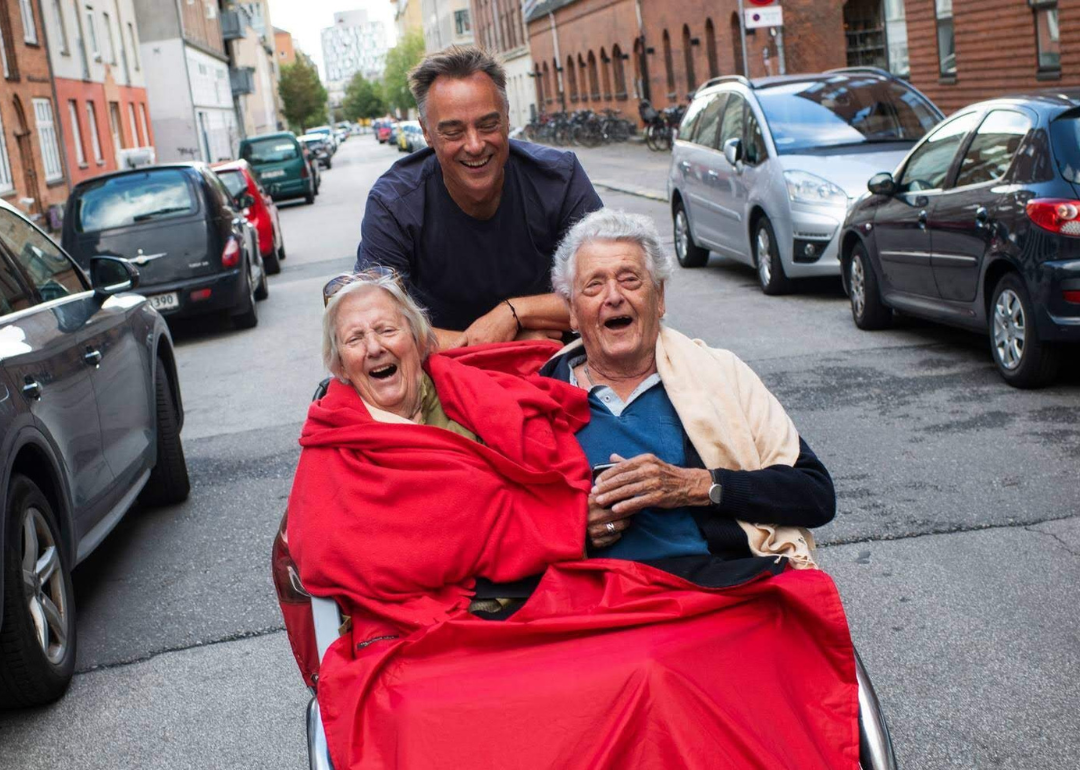
CWA was born in Copenhagen in 2012, when Danish management consultant Ole Kassow borrowed a rickshaw on a whim and offered an elderly gentleman from a care home a ride. Kassow had watched his father, who lived with multiple sclerosis, grow increasingly isolated. As his formerly extrovert father鈥檚 world shrank, so too did his sense of connection. When Kassow later worked in a care home, he saw a lot of the same issues his dad had been struggling with.
鈥淓lderly people come into a nursing home,鈥� Kassow says, 鈥渁nd their world gets smaller and smaller and smaller, until they just sit inside within their four walls.鈥�
From that one act of kindness a movement spread, first across Denmark and then across the world. Today the nonprofit CWA spans more than 3,600 chapters and 50,000 volunteers in 41 countries, including in 25 U.S. states. It works in bike-friendly Copenhagen as well as in . Each chapter operates somewhat differently according to local needs, but all share five guiding principles: Generosity, slowness, storytelling, relationships, without age. A visually impaired passenger called the initiative the 鈥渞ight to wind in your hair.鈥�
The trishaws cost anywhere from $10,000 to $15,000 each, some modified to fit wheelchairs. 鈥淲hen you consider the impact of one trishaw and think about how much money people otherwise spend on elder care 鈥� beds and wheelchairs and what not 鈥� it鈥檚 actually not a lot,鈥� Kassow points out. He calls each ride 鈥渁 bubble where magic happens.鈥� Some chapters operate with support from their municipal communities, but most depend entirely on local fundraising and volunteers.
While anybody can ride for free, CWA prioritizes riders with limited mobility. Seigel-Boettner鈥檚 youngest rider was a 5-year-old boy on a feeding tube who wanted to ride to school with his friends. 鈥淲e provided that,鈥� he says, 鈥渁nd it made him very happy.鈥�
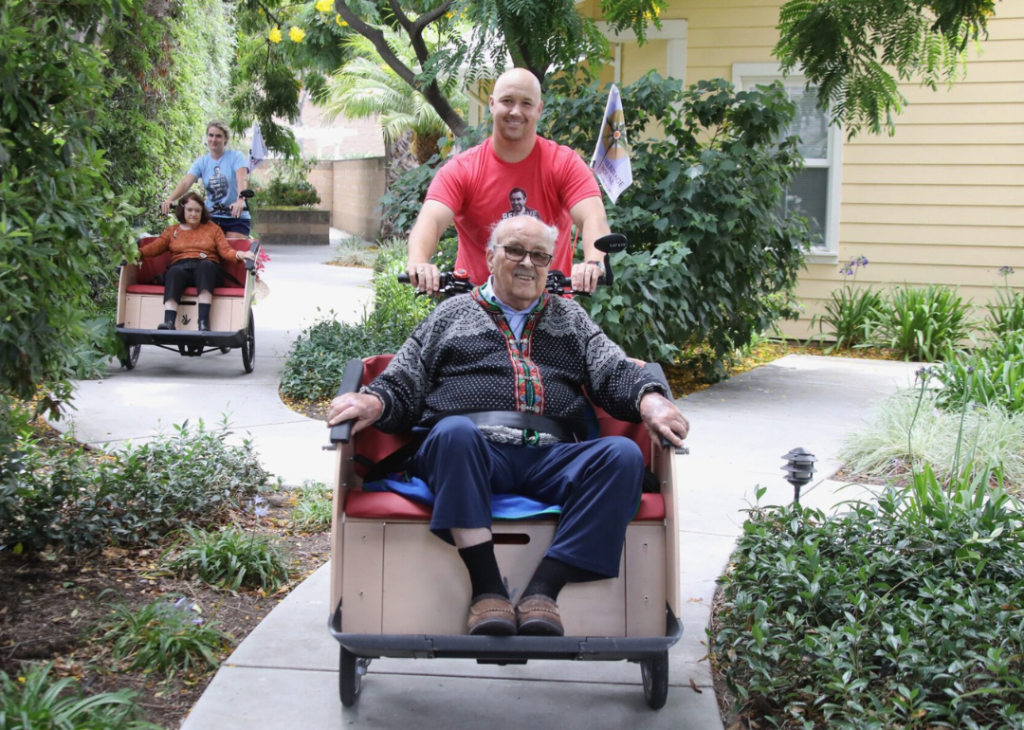
He remembers the first time he brought a trishaw to Wright鈥檚 senior home. 鈥淭he owner waved me into his office and asked me if he could purchase a trishaw for the home,鈥� Seigel-Boettner recalls. 鈥淗e said it was the first time he ever saw some of the residents giggle and laugh.鈥�
Seigel-Boettner loves cycling so much that he spent his honeymoon cycling with his wife, and he pedaled his newborn sons home from the hospital. He used to be a middle school teacher and took his students on long bike rides across the country. At least once a week, he still pairs a middle schooler with a senior for a ride on a trishaw, to spark conversations across generations that wouldn鈥檛 otherwise happen: 鈥淭hey talk about life, music, what鈥檚 changed. The bike isn鈥檛 the end. The bike is the means to see the world from the riding partner鈥檚 perspective.鈥�
Now he doesn鈥檛 consider himself retired but 鈥渞ewired for new experiences.鈥� While people might think he鈥檚 feeding his karma bank by doing something good, he explains, 鈥淚 come back from each ride completely changed. Society is missing a bridge between older people and everyone else 鈥� and this,鈥� he says, tapping the trishaw frame, 鈥渋s that bridge.鈥�
Sometimes, his riders have lost their ability to speak at all. When Seigel-Boettner rides with someone experiencing memory loss, the words might fade away, but not the emotional resonance. The vibrations, the breeze, watching the passing world together become their shared language. 鈥淭hey see a flower, or the ocean, or a bird, and suddenly a memory surfaces,鈥� Seigel-Boettner says.
CWA is much more than a lovely idea. A found that participants experienced measurable improvements in mood and well-being after rides. In Canada, a of long-term care residents showed that cycling significantly increased immediate happiness and maintained overall quality of life without causing fatigue or pain. Another evaluation in Scotland of a pilot program linked rides with reductions in social isolation and noted benefits for both residents and volunteers.
The most comprehensive evidence comes from the study, a three-year multimethod evaluation by the National Institute of Public Health and the University of Southern Denmark. Researchers measured a striking shift in before-and-after self-rated life satisfaction 鈥� an improvement greater than that of the world鈥檚 happiest nations. The study also noted lasting gains in emotional resilience, social connectedness and sense of purpose.
Beyond data, thousands of personal stories reveal the program鈥檚 subtle transformations, cross-generational exchange and renewed agency.
During the COVID-19 pandemic, Seigel-Boettner trained caregivers to become pilots, ensuring residents could still feel the sun on their faces. Some care homes have since incorporated rides into their regular activities. 鈥淚t changed their relationships,鈥� Seigel-Boettner attests. 鈥淐aregivers became companions again and also experienced much more appreciation from the families.鈥�
CWA has since participated in memorials, weddings and Christmas parades. The trishaws roll wherever community life unfolds.
As Seigel-Boettner navigates a gentle stretch of coastline road and divulges a local鈥檚 secret spot for buying the freshest fish, Wright leans forward, her blue eyes bright. A soft wind tugs at her white, chin-length hair under her straw hat. A jogger gives her a thumbs-up; a toddler waves. 鈥淚 had my birthday picnic on the beach here,鈥� she remembers, pointing to the sand. She is no longer bound to her walker, but flying along the coast, reconnecting with her own narrative.
Seigel-Boettner pedals steadily, electric-assist humming beneath his seat. He listens as she talks about a childhood holiday in her native Illinois, her children and grandchildren. The city drifts by in slow motion, laughter from a passing cyclist, birdsong, the surf鈥檚 distant roar.
In this unhurried space, conversation flows across decades. The pilot becomes a companion; the rider a storyteller. The trishaw excursion is a chance to be seen again, not as a diagnosis but a person, not a burden but a being alive in the world. For pilots, each ride is a mirror, a reminder of what it means to age, to hope, to connect. For both, it鈥檚 a moment when time loosens its grip.
At the end of the ride, Seigel-Boettner helps Wright from her seat. She lingers at the threshold, turning to him. 鈥淭hank you,鈥� she says. 鈥淭hat was the best part of my day.鈥� He waves and she waves back before she heads inside.
For Seigel-Boettner, the ride was the best part of his day, too. 鈥淚鈥檝e ridden through downtown 5 million times, but with Elizabeth it was completely new,鈥� he says. 鈥淐arpe diem 鈥� seize each day like it鈥檚 your first.鈥�
was produced by and reviewed and distributed by 黑料社.