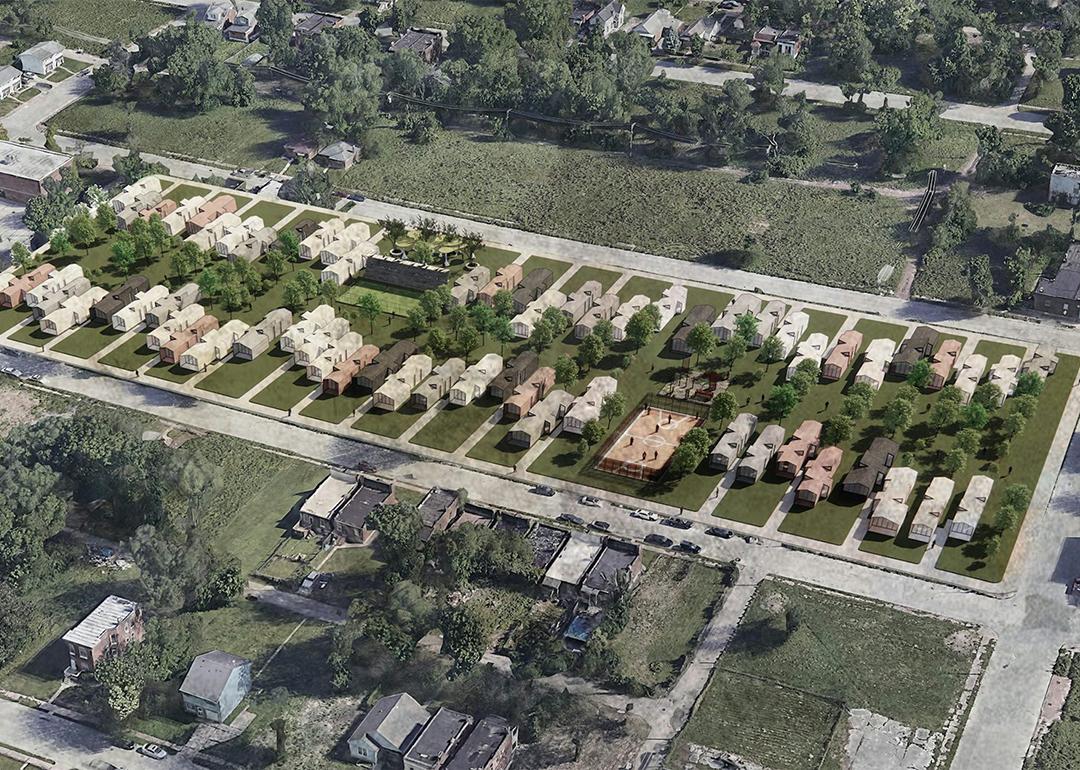
The future of housing is concrete
Wood is, by far, used in the U.S. for single-family home construction.
But wood construction isn鈥檛 engineered for long-term durability, and it , particularly in the face of .
In response to these challenges, mass-produced concrete homes can offer affordable, resilient housing in the U.S. By leveraging the latest innovations of the precast concrete industry, this type of homebuilding can meet the needs of a changing world.
Pablo Moyano Fern谩ndez, assistant professor of architecture at Washington University, examines the advantages of mass-produced concrete homes for .
Wood鈥檚 rise to power
rely on wood framing.
Wood has deep historical roots as a building material in the U.S., dating back to the earliest European settlers who constructed shelters . One of the most recognizable typologies was the log cabin, built from large tree trunks notched at the corners for structural stability.
In the 1830s, wood construction underwent a significant shift . This system used standardized, sawed lumber and mass-produced nails, allowing much smaller wood components to replace the earlier heavy timber frames. It could be assembled by unskilled labor using simple tools, making it both accessible and economical.
In the early 20th century, , which became the dominant method. By using shorter lumber lengths, platform framing allowed each floor to be built as a separate working platform, simplifying construction and improving its efficiency.
The proliferation and evolution of wood construction helped shape the architectural and cultural identity of the nation. For centuries, wood-framed houses have defined the American idea of home 鈥� so much so that, even today, when Americans imagine a house, they typically envision one built of wood.
Today, light-frame wood construction dominates the U.S. residential market.
Wood is relatively affordable and readily available, offering a cost-effective solution for homebuilding. Contractors are familiar with wood construction techniques. In addition, building codes and regulations have long been tailored to wood-frame systems, further reinforcing their prevalence in the housing industry.
Despite its advantages, wood light-frame construction presents . Wood is vulnerable to fire. And in hurricane- and tornado-prone regions, wood-framed homes can be damaged or destroyed.
Wood is also highly susceptible to water-related issues, such as swelling, warping and structural deterioration caused by leaks or flooding. , mold, rot and mildew further compromise the longevity and safety of wood-framed structures, especially in humid or poorly ventilated environments.
The case for concrete
Meanwhile, concrete has revolutionized architecture and engineering over the past century. and durability, while also allowing design flexibility and versatility. It鈥檚 low-cost and low-maintenance, , which refers to the material鈥檚 ability to absorb and store heat during the day, and slowly release it during the cooler nights. This can lower heating and cooling costs.
Properly designed concrete enclosures against a wide range of hazards. Concrete can withstand fire, flooding, mold, insect infestation, earthquakes, hail, hurricanes and tornadoes.
It鈥檚 commonly used for home construction in many , such as Europe, Japan, Mexico, Brazil and Argentina, as well as India and other parts of Southeast Asia.
However, despite their multiple benefits, concrete single-family homes are rare in the U.S.
That鈥檚 because most concrete structures are built . In this technique, the concrete is formed and poured directly at the construction site. The method relies on built-in-place molds. After the concrete is cast and cured over several days, the formwork is removed.
This process is labor-intensive and time-consuming, and it often produces considerable waste. This is particularly an issue in the U.S., where labor is more expensive than in other parts of the world. The material and labor cost of the total construction cost.
Portland cement, the binding agent in concrete, requires significant energy to produce, resulting in considerable carbon dioxide emissions. However, this environmental cost is often offset by concrete鈥檚 durability and long service life.
Concrete鈥檚 design flexibility and structural integrity make it particularly effective for large-scale structures. So in the U.S., you鈥檒l see it used for large commercial buildings, skyscrapers and most highways, bridges, dams and other critical infrastructure projects.
But when it comes to single-family homes, cast-in-place concrete poses challenges to contractors. There are the higher initial construction costs, along with a lack of subcontractor expertise. For these reasons, most builders and contractors stick with what they know: the wood frame.
A new model for home construction
, however, offers a promising alternative.
Unlike cast-in-place concrete, precast systems allow for off-site manufacturing under controlled conditions. This improves the quality of the structure, while also reducing waste and labor.
, a prototype worked on by a team at Washington University in St. Louis about a decade ago, showed the advantages of a precast home construction.
To build the precast concrete home, the team used , one of the latest advances in the concrete industry. Compared with conventional concrete, it鈥檚 about six times stronger, virtually impermeable and more resistant to freeze-thaw cycles. Ultra-high-performance concrete can last several hundred years.
The strength of the CRETE House was tested by shooting a piece of wood at 120 mph to simulate flying debris from an F5 tornado. It was unable to breach the wall, which was .
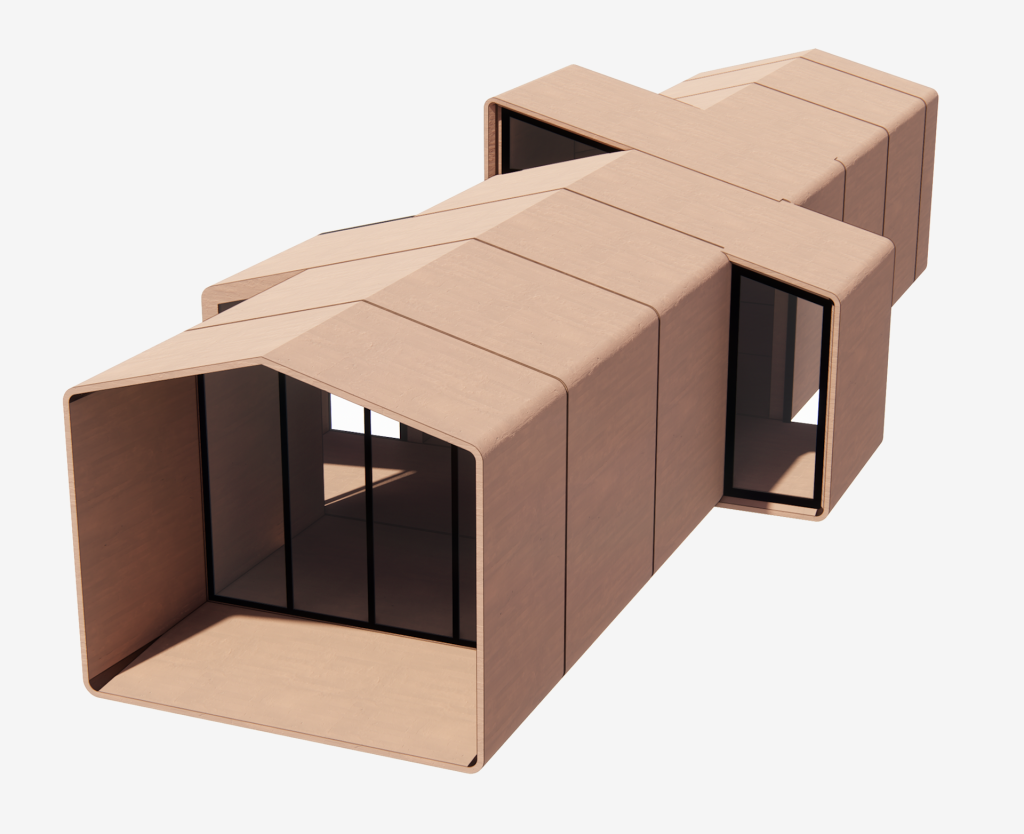
The offers another example of a potential solution for affordable, resilient housing. The house consists of a modular, precast concrete system of 鈥渞ings鈥� that can be connected to form the entire structure 鈥� floors, walls and roofs 鈥� creating airtight, energy-efficient homes. A series of different rings can be chosen from a catalog to deliver different models that can range in size from 270 to 990 square feet.
The precast rings can be transported on flatbed trailers and assembled into a unit in a single day, drastically reducing on-site labor, time and cost.
Since they鈥檙e built using durable concrete forms, the house can be easily mass-produced. When precast concrete homes are mass-produced, the cost can be competitive with traditional wood-framed homes. Furthermore, the homes are designed to last far beyond 100 years 鈥� much longer than typical wood structures 鈥� while significantly lowering utility bills, maintenance expenses and insurance premiums.
The project is also envisioned as an open-source design. This means that the molds, which are expensive, are available for any precast producer to use and modify.
Leveraging a network that鈥檚 already in place
Two key limitations of precast concrete construction are the size and weight of the components and the distance to the project site.
Precast elements must comply with standard transportation regulations, in order to pass under bridges and prevent road damage. As a result, components are typically limited to dimensions that can be safely and legally transported by truck. Each of the Compact House鈥檚 pieces are small enough to be transported in standard trailers.
Additionally, transportation costs become a major factor beyond a certain range. In general, the practical delivery radius from a precast plant to a construction site is 500 miles. Anything beyond that becomes economically unfeasible.
However, the infrastructure to build precast concrete homes is already largely in place. Since precast concrete is often used for office buildings, schools, parking complexes and large apartments buildings, capable of producing and delivering components within that 500-mile radius.
There are other approaches to build homes with concrete: Homes can use , which are similar to cinder blocks. This is a common technique around the world. involve rigid foam blocks that are stacked like Lego bricks and are then filled with poured concrete, creating a structure with built-in insulation. And there鈥檚 even , a rapidly evolving technology that is in its early stages of development.
However, none of these use precast concrete modules 鈥� the rings in the prototypes 鈥� and therefore require substantially longer on-site time and labor.
Precast concrete homes offer a compelling vision for . They signal a generational shift away from short-term construction and toward long-term value 鈥� redefining what it means to build for resilience, efficiency and equity in housing.
was produced by and reviewed and distributed by 黑料社.