The importance of discretion and privacy in biohazard and trauma cleanup
The American home looks different than it did 60 years ago. As marriage rates stall and the 鈥渟olo-living鈥� economy gains momentum, the U.S. is observing a demographic shift that is quietly reshaping the demands on property management and public health. Today, single-person households represent a staggering 29% of all U.S. homes鈥攁 record high that has nearly doubled since the 1960s, according to data.
This isn鈥檛 just a social statistic; it鈥檚 a logistical tipping point. With more people living in isolation, the frequency of unattended deaths and 鈥渟ilent鈥� health hazards has surged, forcing a move toward professionalized biohazard remediation.
For property owners, the stakes of remediation extend beyond simple hygiene into the realm of asset preservation and liability management. When biological contaminants are present, the social stigma of the event often acts as a roadblock to recovery.
Yet, in the world of biohazard mitigation, delay is the enemy of value. Failing to act immediately often leads to a utilization inefficiency, where a property remains unmarketable and dangerous due to lingering pathogens that require specialized industrial intervention to resolve.
In this article, , a biohazard and crime scene decontamination firm, shares what the modern property owner needs to know.
Technical Drivers of the Biohazard Industry
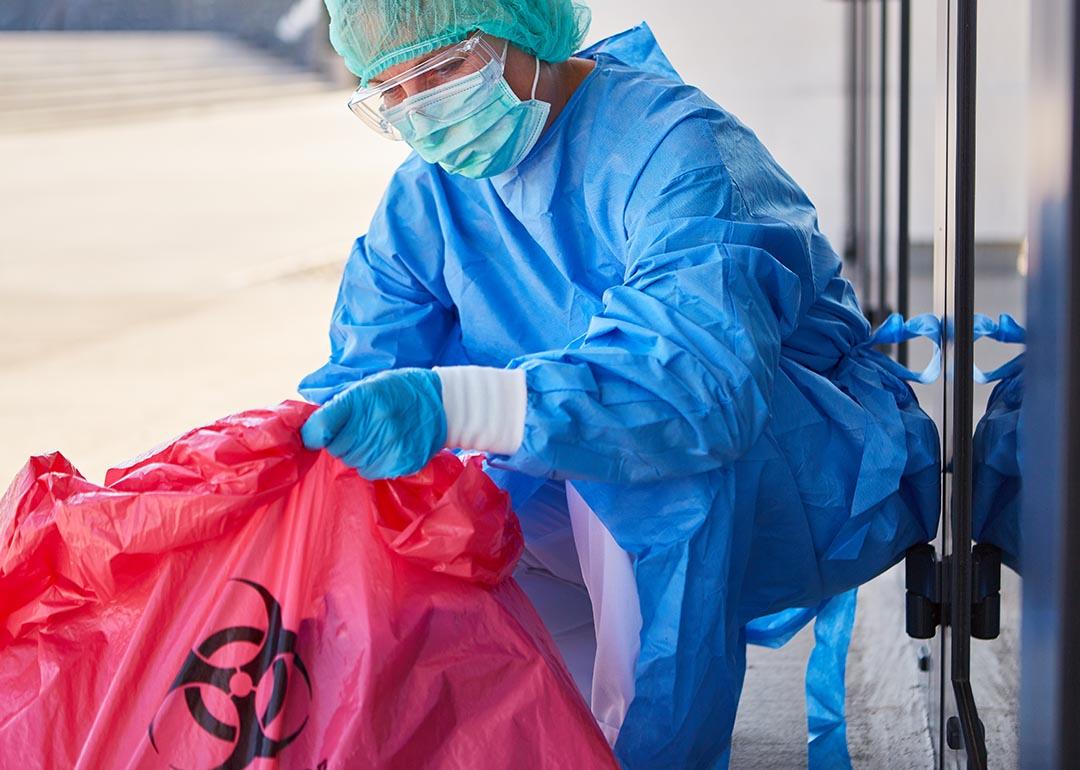
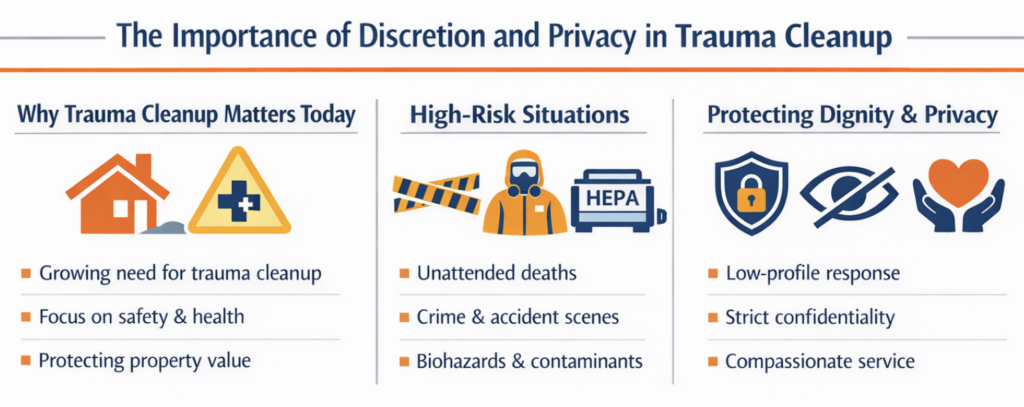
While popular culture often frames trauma cleanup through the lens of a crime scene, the industrial reality is far more expansive. Professional remediation is a technical necessity in any environment where 鈥攆rom the fallout of animal hoarding to workplace accidents鈥攃ompromise human safety. The 鈥渦nattended death鈥� has become a standard challenge for modern property managers, representing a scenario where 鈥渃leaning鈥� is insufficient and 鈥渟tructural restoration鈥� is required.
During decomposition, the release of volatile organic compounds (VOCs) and pathogens doesn鈥檛 merely linger on surfaces; it migrates. These elements 鈥渂reathe鈥� into porous materials like flooring, subflooring, and drywall. Without the deployment of industrial-grade ozone generators and, the damage can quickly cross a threshold into the irreversible.
Adherence to strict is what separates this specialized work from general janitorial services, as it addresses long-term liability and property habitability rather than just immediate visual hygiene.
The Logistics of Operational Privacy
In a densely populated or highly connected urban environment, the 鈥渟ocial contagion鈥� of a crisis can be as damaging to a property鈥檚 value as the biohazards themselves. This is why discretion has transitioned from a courtesy into a core operational protocol.
The objective is to mitigate the risk of 鈥渟pectacle-seeking鈥濃�攖he phenomenon where public crises attract sensationalist attention that compromises the privacy and future marketability of a residence or business.
Standard operational protocols for professional remediation involve several technical layers designed to mitigate liability:
- Logistical anonymity: To prevent neighborhood scrutiny, technicians often utilize 鈥減lain-wrap鈥� vehicles with minimal branding. Furthermore, the donning of personal protective equipment (PPE) is typically delayed until a shielded perimeter has been established, avoiding the visual anxiety that protective suits can trigger in the public.
- The privacy perimeter: In an era of social media exposure, rigid confidentiality is a risk-management necessity. Professional firms enforce non-disclosure standards for all staff, ensuring that site documentation required for insurance adjusters is handled via encrypted channels and with explicit client consent.
- Visual containment systems: The use of high-tension poles and heavy-duty plastic sheeting serves a dual purpose. It acts as a bio-barrier to prevent the cross-contamination of airborne pathogens and creates a 鈥渧isual sanctuary鈥� that prevents accidental exposure for occupants or neighbors.
The Maturation of the Biohazard Remediation Market
As the 鈥渓oneliness epidemic鈥� continues to reshape national demographics, the demand for professionalized biohazard services is expected to increase. The industry is moving toward a state of market maturity where remediation is viewed through the lens of public health and forensic science rather than emergency response.
Consequently, property insurance providers are increasingly requiring documented forensic cleaning to satisfy liability coverage, a trend that is formalizing specialized remediation as an essential, non-negotiable component of modern urban property management.
By adhering to standardized decontamination protocols, the primary objective of modern remediation is the mitigation of utilization inefficiency, ensuring that property assets maintain their underlying valuation and habitability despite exposure to high-risk biological contaminants.
For the modern property owner, navigating these high-stakes environments requires a realistic understanding of these technical avenues to ensure long-term safety and asset preservation.
was produced by and reviewed and distributed by 黑料社.