When ICE shows up, these businesses will be ready
Last April, at the James Beard Foundation鈥檚 , food industry leaders gathered to discuss the political and economic landscape with one concern hanging grimly in the air: Undocumented and immigrant workers were increasingly afraid to come into work after ICE raids at the outset of President Donald Trump鈥檚 second term.
But it just so happened the summit took place in Asheville, North Carolina, where activists had already asked, 鈥淲hat would it take to make this the safest state for immigrants in the south?鈥� as Andrew Willis Garc茅s, senior strategist with the immigrant justice organization , told .

One answer: , a framework developed by Siembra NC and at the summit to help restaurants and other businesses train up on legally vetted protocols to defend employees against ICE. The idea quickly took hold 鈥� there are now over 1,000 4th Amendment Workplaces across North Carolina, with 4th Amendment Workplace resolutions passed in three cities and similar efforts underway across 12 states.
It鈥檚 emerged as perhaps the most powerful workforce training to help businesses prepare for ICE raids, but it is not the only one. Across the country, training, resources, and hotlines have been developed for workplaces, alongside an effort to harness the wider labor movement as a force against ICE.
Though the ICE raids that make the news often take place on the street, workplaces are, in fact, a frequent target. 鈥淲e鈥檝e seen ICE this year go into workplaces more than a lot of other kinds of places where people are gathered,鈥� Willis Garc茅s explains. 鈥淲ith workplaces, there鈥檚 usually an open door you can walk through.鈥�
According to , ICE publicly reported at least 40 worksite enforcement actions resulting in over 1,100 arrests within the first seven months of the current Trump administration. Businesses employing noncitizen workers 鈥� restaurants, car washes, automotive shops, bakeries, nail salons 鈥� are typically targeted. ICE has also scaled up large raids at workplaces like and plants.
These raids often represent legal violations, which 4th Amendment Workplaces raise awareness around. The Fourth Amendment to the U.S. Constitution guarantees 鈥渢he right of the people to be secure in their persons, houses, papers and effects, against unreasonable searches and seizures鈥� without a warrant based on probable cause 鈥� that is, reason to believe that a crime may have been committed.
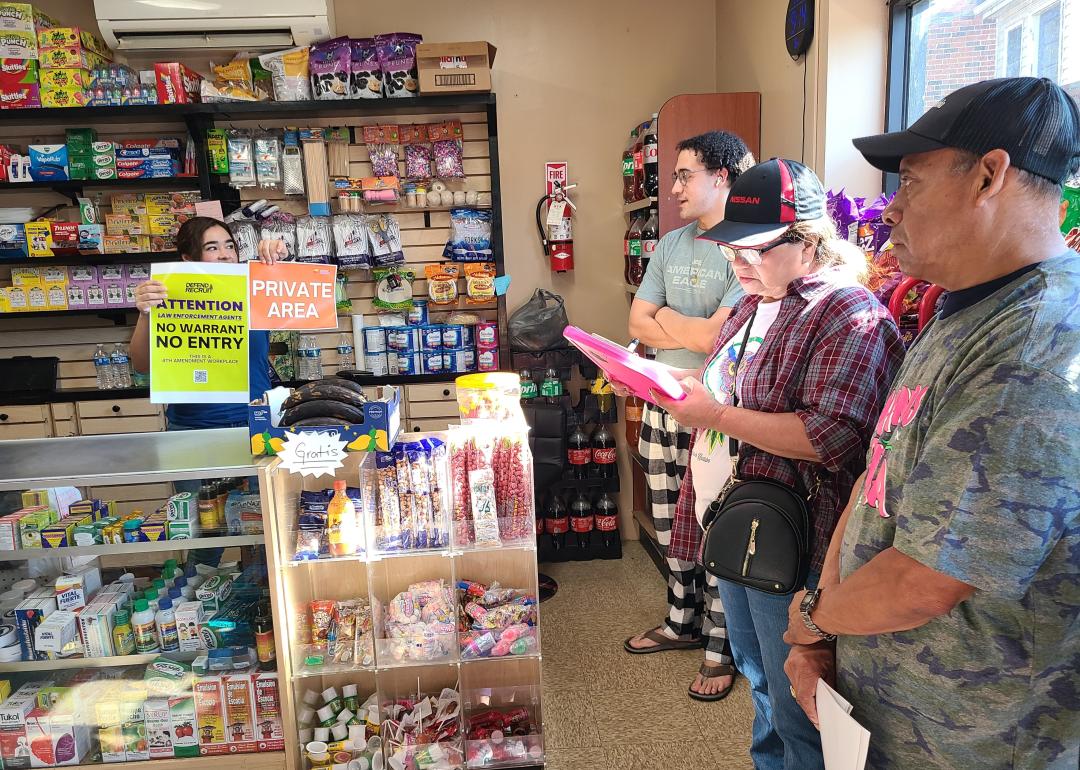
In North Carolina, volunteers canvas businesses across the state to share what it means to be a 4th Amendment Workplace: Identify invalid ICE warrants, secure private employee areas, document unconstitutional actions, and defend all workers, no matter their immigration status. Resources include a workplace guide, organizing tool kit, posters signaling opposition to unconstitutional search and seizures, employee handouts, and tips for designating private employee areas.
Workplaces can request dedicated training, in which organizers help business owners and employees develop workplace-specific protocol and lead them through role-playing scenarios. 鈥淲e help you think through 鈥� what would you do right after the fact? What would you do to preserve footage, how do you support families left behind, what鈥檚 the immediate triage that needs to happen [after a raid]?鈥� explains Willis Garc茅s.
of Greensboro, North Carolina, was an early adopter, participating in training, promoting itself as a 4th Amendment Workplace, hiring a lawyer, regularly keeping staff informed of ICE response protocol, even a book on how to resist ICE. Co-owner Steve Mitchell says it is 鈥渁bsolutely essential鈥� for business owners to step up on behalf of employees, especially if the owners are white and legally protected residents: 鈥淚t鈥檚 important for people like us to say that this isn鈥檛 right, and we鈥檙e going to stand on this side of the issue.鈥�
Even though there hasn鈥檛 been a heavy ICE presence in Greensboro, the bookstore鈥檚 work with Siembra NC 鈥済ives us some sense of confidence,鈥� Mitchell says. 鈥淲hether that鈥檚 misplaced or not, it at least helps us know what our rights are in that situation.鈥� He adds that using Siembra鈥檚 model has made the business feel connected to a broader network of activists.
Willis Garc茅s describes that model as 鈥減lug and play,鈥� easily adaptable outside the state and across a variety of workplaces. Siembra NC recruited small businesses first, with the goal of expansion into higher-target workplaces like factories and farms.
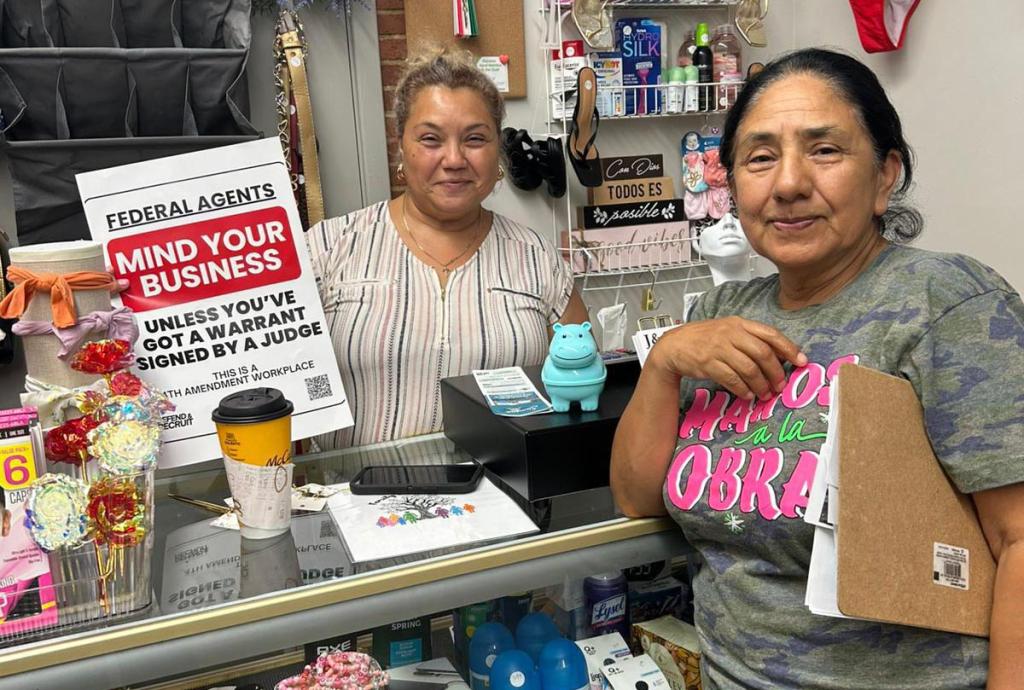
Today, some North Carolina farmers display giant vinyl banners about their constitutional rights, a riff on Siembra NC鈥檚 signage. In Oregon, organizers dubbed themselves 鈥淏addies for the Fourth.鈥� In Minneapolis, the 4th Amendment Workplace was a central demand in a public-pressure .
There have been other efforts to develop localized training. In New York, trains mostly within the city鈥檚 Asian American community, which it has worked with since the COVID-19 pandemic. Last year, across the city鈥檚 Chinatown.
Nonviolent Peaceforce鈥檚 in-person training happens with trusted community partners and focuses on de-escalation and self-regulation tactics, alongside scenario and role-playing. 鈥淲e came to develop scenarios really at the request of community members who felt that they really needed to know what it was like to be in the moment,鈥� says Roz Lee, head of the organization鈥檚 U.S. efforts. She says simple tactics to slow things down 鈥� like introducing yourself, asking ICE agents their name, asking for a warrant and taking time to inspect it 鈥� can shift a potentially intense and traumatic interaction.
Other groups have tied the urgency around ICE to larger labor organizing efforts. (EWOC) emerged to help nonunionized labor organize in response to COVID-19. More recently, EWOC for resisting ICE, which are tied to broader workplace organizing tactics like facilitating conversation among employees, building a committee and planning collective action together.
鈥淭hese steps are very universal, whether you work in an office, in a kitchen, at a nonprofit,鈥� says Wes Holing, an EWOC organizer. 鈥淚f you鈥檙e talking about bread-and-butter issues, or you鈥檙e talking about a workplace that鈥檚 safe from ICE, you鈥檙e still ultimately fighting for a place that respects you as a person.鈥�
This January, EWOC partnered with Twin Cities Democratic Socialists of America to hold a to train workers on their rights and protections to participate in the . It was part of a much larger mobilization among Minneapolis residents and businesses responding to .
The city mobilized far beyond one-off trainings; instead, an entire ecosystem emerged. 鈥淭he sheer volume, the sheer magnitude of mobilization 鈥� it felt like every single person I knew was extremely active,鈥� says Mike Urbanski, who helps lead legal observer training with . Monarca is a project under the immigrant justice organization , which canvassed businesses in Twin Cities鈥� immigrant communities. They鈥檇 then direct people to Monarca鈥檚 ICE hotline as well as its two-hour, in-person training, which focuses on 鈥渦pstander鈥� legal observation tactics.
Monarca鈥檚 trainings were also shared through social media, word of mouth and within community spaces and houses of worship. 鈥淲e could post a training with 1,000 people in Minneapolis and fill it within four or five days,鈥� Urbanski says. 鈥淎nd most of those people would come, and another 100 people would just show up.鈥�
The also canvassed and shared resources among Twin Cities businesses, channeling that energy into the this February, which brought together over 300 unionized and nonunionized workers across sectors. 鈥淚t was about building working class power and coordinated strike action, to really push people into action and not wait on managers, bosses or labor officials to save us,鈥� says organizer Aminah Sheikh.
Now that Operation Metro Surge has wound down, organizers turned their attention to May Day by organizing strike committees, holding strike trainings, conducting labor education and committing unions and community organizations to strike on May 1. Sheikh says there is a growing realization that workers must build political power far beyond their workplace.
鈥淟isten, in order for us to really stop 鈥� abolish 鈥� ICE, like people are saying, from the grassroots,鈥� she says. 鈥淭hen we need to do economic disruption.鈥�
was produced by and reviewed and distributed by 黑料社.