World Cup 2026 scam guide: What fans need to know before they buy
World Cup 2026 scam guide: What fans need to know before they buy
The 2026 FIFA World Cup is kicking off across the United States, Canada, and Mexico. The event has fueled intense worldwide excitement. In the first two weeks of the sales window alone, FIFA received more than 150 million ticket requests.
The fraud operations targeting the 2026 FIFA World Cup have been running since August 2025. Cybersecurity researchers鈥� analysis of the structure and scope of this scam found that more than 4,300 fraudulent domains are impersonating FIFA鈥檚 official web presence. The sites were registered months in advance and kept dormant until demand peaked. At the center of these operations is a cyberattacker called Ghost Stadium, which built a pixel-perfect clone of FIFA鈥檚 website, including a working authentication flow, with more than 300 active phishing sites focused specifically on premium and hospitality tickets. The scale was significant enough that the FBI in late May 2026, with the the same week.
have also been called into question recently. In late May 2026, attorneys general of New York and New Jersey launched a formal investigation into FIFA's ticket practices, subpoenaing the organization over allegations of 鈥渁rtificially inflating prices鈥� and 鈥渕isleading fans.鈥� Thousands of tickets were suddenly available one week from kickoff, with FIFA itself accused of offloading unsold inventory on resellers such as SeatGeek.
Together, these circumstances create a perfect storm for both confusion and fraud. Consumers might find it increasingly difficult to determine the actual and reasonable cost of a ticket and aren鈥檛 sure which online platforms to trust for valid tickets and merchandise. Meanwhile, for over a year, fraudsters have been carefully setting the stage to take advantage of these conditions. Not all of the scammers鈥� strategies are new, but all are increasingly polished and more difficult to detect.
Quick Facts: What You Need to Know
- Cybersecurity researchers have identified more than 4,300 fraudulent domains impersonating FIFA鈥檚 official site, many of which were registered since August 2025.
- In late May 2026, the FBI issued a formal warning about fake FIFA websites designed to steal financial and personal data.
- Current scam strategies include fake tickets, counterfeit hospitality packages, fraudulent rentals, fake merchandise, a fictitious 鈥淲orld Cup Visa,鈥� and fraudulent crypto tokens.
- AI tools are making it increasingly difficult to distinguish fraudulent sites and products from authentic ones.
- Legitimate FIFA tickets are delivered through the FIFA app, not paper tickets or screenshots.
- On Location is FIFA鈥檚 official hospitality provider. Any hospitality offer not traceable to On Location or its published sales agents could be fraudulent.
- The World Cup doesn鈥檛 have an official token, coin, or fan currency.
- Attending the World Cup doesn鈥檛 require a special visa. Each of the three host countries (United States, Canada, Mexico) has its own entry requirements, and a match ticket doesn鈥檛 guarantee border entry.
- FIFA鈥檚 own recent ticket practices have been called into question recently, which means that it鈥檚 increasingly difficult to determine the reasonable price of an authentic ticket and whether a seller is legitimate.
Why these scams are harder to spot
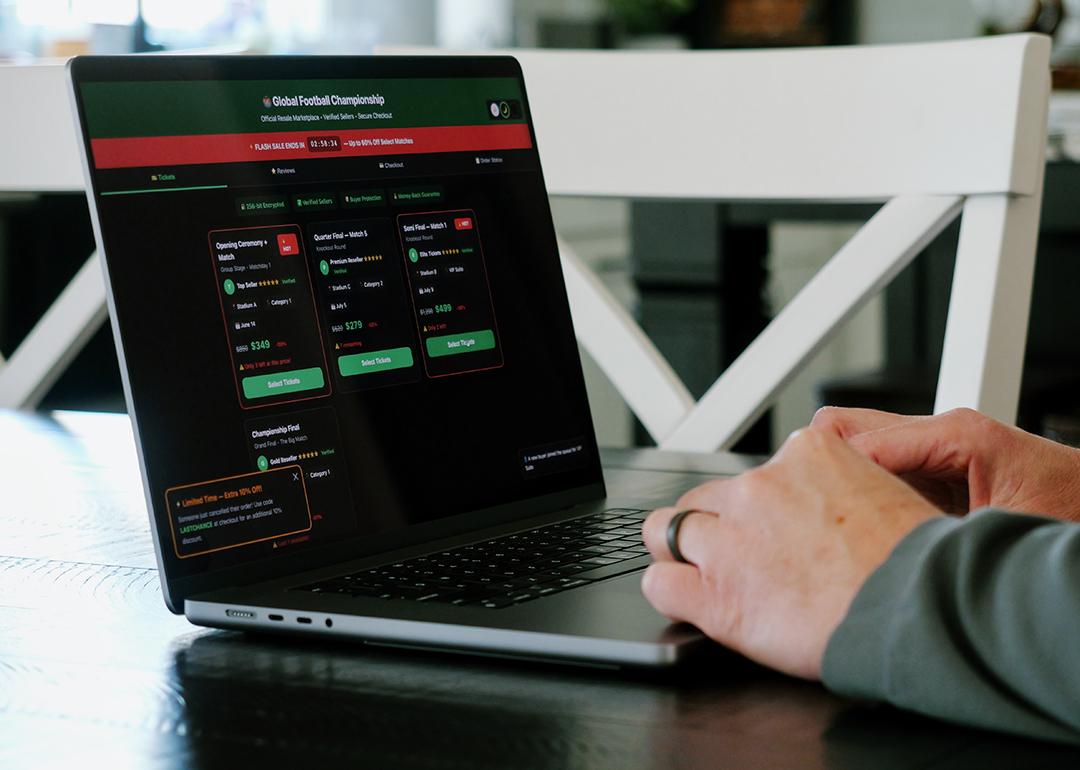
AI has become instrumental in making scams harder to identify. Cybersecurity researchers have identified scam campaigns using AI-generated product images and website clones that pull authentic branding directly from FIFA鈥檚 own servers. In other words, a fraudulent page 鈥渂orrows鈥� from and then uses the same branding and imagery as an authentic site. For example, noted that some scam ads for fake World Cup merchandise were polished enough to look like official marketing. Pressure tactics are one aspect of these scams that isn鈥檛 new. The site may use countdown timers that reset when you reload the page. They might also create a sense of urgency, using phrases such as 鈥淥nly a few tickets left!鈥� which appear across every scam category and yet, oddly, stock counters don鈥檛 decrease after tickets are purchased.
It鈥檚 critical to slow down and ensure a site is legitimate before purchasing tickets or merchandise. Based on the latest fraud intelligence compiled by , below are six scams to watch out for.
1. Fake tickets
Quick Facts: Who鈥檚 authorized to sell World Cup tickets?
- FIFA sells primary tickets exclusively through fifa.com/tickets.
- The FIFA Resale/Exchange Marketplace is the only authorized fan-to-fan resale platform.
- All tickets are delivered digitally through the FIFA World Cup 2026 app. No physical tickets exist.
What is a fake ticket scam?
Fake ticket scams usually reach fans through three primary channels.
Fake ticket sites. Some fake ticket sites use a tactic called 鈥渢yposquatting,鈥� which involves registering domains that are similar to fifa.com but with subtle differences in the URL (for example, fiffa-dot-com, fifa-dot-city, or an alternate extension such as .live or .sale). Other fraudulent websites bear no resemblance to an official source; they are simply a convincing-looking ticket marketplace created specifically to collect payment before disappearing.
In both cases, the checkout process and confirmation email may appear legitimate. Most victims receive either a convincing-looking fake ticket that fails to scan at the venue or nothing at all once payment clears. In more sophisticated cases, scammers have duplicated real ticket QR codes, which appear to work until match day, when the seat turns out to be already occupied. Most of these sites reach buyers through paid social media ads (versus the consumer actively searching the internet), which is how a site with no history and reputation can still manage to reach a significant number of victims.
Social media sellers. found that all (100%) of them had newly created social media profiles, versus legitimate resellers that had long-term accounts. One tested a seller in a Facebook group by requesting tickets to a match between two countries that aren鈥檛 competing in the 2026 World Cup. The seller agreed to provide them without hesitation, which of course signals brazen fraud.
Sellers on popular resale platforms. This third category involves fraudsters using legitimate businesses (such as StubHub or SeatGeek) to sell tickets. Because ticket resale is legal and largely unregulated in the United States and Canada, platforms can list World Cup tickets without violating laws and FIFA can鈥檛 prevent them from doing so. FIFA鈥檚 terms of sale do however reserve the right to invalidate tickets purchased outside authorized channels.
The big risk for consumers is that the tickets may be fraudulent or nonexistent. Some resellers list 鈥渟peculative tickets,鈥� or tickets that are posted before the seller actually holds the ticket, which compounds the uncertainty. While buying from a with a documented guarantee can be meaningfully safer than buying from an individual on social media, it carries risks that buying directly through FIFA would prevent.
How to protect yourself: Type directly into your browser instead of clicking a link in an ad or email. When buying from a major secondary platform, ask the seller to confirm the tickets are in their FIFA account, and look into each platform鈥檚 consumer guarantees before committing. On social platforms, check the account creation date to see how long the account has been active. Newly created accounts are a red flag.
2. Counterfeit hospitality and VIP packages
Quick Facts: Who鈥檚 authorized to sell hospitality packages?
- On Location is FIFA鈥檚 official hospitality provider for the 2026 tournament and the only entity permitted to sell official hospitality packages.
- Official packages are available at fifa.com/hospitality or through On Location鈥檚 published sales agents.
- Hospitality packages aren鈥檛 eligible for listing on the FIFA Resale Marketplace.
- All hospitality tickets and details are delivered through the FIFA World Cup 2026 app.
- As of Jan. 1, 2026, new purchases require full payment at checkout. No installment plans are available.
What is a fake hospitality package scam?
The premium tier of World Cup fraud is particularly effective because high price points can still seem legitimate. names hospitality packages explicitly as a target category. For example, Category 1 seats for the July 19 final at MetLife Stadium are listed at nearly $33,000, which is roughly three times the previous record for a World Cup ticket. This inflated pricing creates real demand for 鈥渃ompetitive鈥� premium alternatives.
Ghost Stadium, the threat actor behind the largest phishing network identified so far, focuses more than 300 of its active sites specifically on the premium and hospitality tier.
The delivery mechanism for this type of scam mirrors standard ticket fraud. The checkout process and confirmation email are convincing, Consumers don鈥檛 know they received a cloned or invalid QR code until they get to the venue. In some cases, buyers receive what appears to be a complete hospitality package confirmation with booking details and catering confirmations, only to find no reservation exists when they arrive.
How to protect yourself: The full list of authorized global sales agents is published at . If a seller isn鈥檛 on that list and can鈥檛 be verified through On Location directly, they have no legitimate connection to the official program. Packages can also be purchased at or by calling On Location at their customer service number.
3. Fraudulent travel and accommodations
Quick Facts: What do we know about travel for the World Cup?
- FIFA hasn鈥檛 designated an official accommodation partner.
- Each of the 16 host cities has official Fan Zones with free public programming as part of the tournament.
- The tournament spans three countries with entirely separate booking markets and pricing levels. Cancellation norms also vary.
- Booking platforms that hold payment in escrow until check-in offer the strongest consumer protection available for short-term rentals.
What is a fraudulent accommodation scam?
In April 2026, that exposed customer reservation details including names, email addresses, phone numbers, travel dates, and property specifics. Criminals are now using those real details to impersonate hotels and contact travelers requesting payment through external channels. Because the message includes accurate reservation information, it鈥檚 nearly indistinguishable from legitimate communication from the property.
Beyond that breach, the broader accommodation fraud patterns are consistent with what we see around any major international event. Scammers create short-term rental listings for properties they don鈥檛 control, using a real building as cover where no rental arrangement exists. Cloned hotel booking sites capture payment details and deposits before going dark. The has flagged nonexistent short-term rentals as a specific category of active fraud around the tournament. Secondary host cities like Guadalajara and Monterrey, where inventory is tighter and international visitors are less familiar with local conditions, are expected to be particularly affected.
The between January 2020 and June 2025, with a median loss per victim of $1,000 in ordinary conditions. A confirmed data breach combined with a global demand surge makes the current environment significantly harder to navigate.
In large host cities in the U.S., midrange hotels that normally run $150 to $250 per night are expected to reach $300 to $500 on match days, with budget options still running $120 to $200. This surge in pricing pushes fans toward unfamiliar listings and unverified sellers.
How to protect yourself: Book through accommodation sites with documented buyer protections and payment held in escrow until check-in (for example, Airbnb or Vrbo, or direct hotel bookings). Pay by credit card. If you receive a message requiring payment through an external channel (such as wire transfer or Zelle), do an independent search for the phone number instead of using the one provided in the message and call the property directly. The Booking.com breach means that a message containing accurate reservation details doesn鈥檛 necessarily prove it鈥檚 legitimate.
If accommodations in host cities are priced beyond your budget, consider staying in a nearby city and commuting to the game. For example, fans attending games in Santa Clara, California, can stay in neighboring cities such as San Jose or Campbell. If you鈥檙e following a team whose knockout stage location hasn鈥檛 been confirmed yet, search for bookings with flexible cancellation policies.
4. Counterfeit merchandise
Quick Facts: Who is authorized to sell official merchandise?
- The official FIFA Store is at store.fifa.com.
- Fanatics is the official retail partner for licensed World Cup merchandise.
- Adidas is the official on-field apparel provider.
- Official merchandise carries holographic licensing tags and official logos. Adidas advises consumers to look for these tags and logos before purchasing from any non-official source.
What is a counterfeit merchandise scam?
seized more than 276,000 counterfeit sports-related items valued at over $33 million last year. They have warned that similar activity will increase ahead of and throughout the World Cup event. But in addition to counterfeit jersey stores, SmartCustomer documented several more specific patterns outlined below.
Fake Panini sticker stores. Panini is the licensed producer of World Cup collectibles, including the official sticker album. Scammers have built lookalike Panini storefronts selling 鈥渙fficial鈥� pre-orders with countdowns and scarcity messaging. Some of these fakes contain obvious errors, such as 鈥淲ordCup鈥� instead of 鈥淲orld Cup,鈥� while still replicating Panini's branding convincingly enough to collect payment.
Quiz funnels using LEGO branding. Fake sites promising 鈥渆xclusive edition World Cup rewards.鈥� The quiz harvests contact information, then routes the consumer toward a subscription billing flow disguised as a shipping fee for the 鈥減rize.鈥� LEGO doesn鈥檛 run quiz funnels; its World Cup activity runs through LEGO.com and physical retail stores.
Merchandise stores advertising discounts of 80% or more. a malicious domain (fifaofficialstore-dot-shop) that used professional design and FIFA鈥檚 official branding and advertising World Cup jerseys and souvenirs at 鈥渦p to 80% off鈥� with free shipping. This example serves as a reminder that suspiciously large discounts on 鈥渙fficial鈥� merchandise are likely a red flag.
How to protect yourself: Buy from the , , or directly. Because official jerseys and merchandise have holographic licensing tags, look for those tags before purchasing anything. If you find a site you believe is fraudulent, report it at and .
5. The fake World Cup visa
Quick Facts: Do I need a World Cup visa?
- A 鈥淲orld Cup Visa鈥� doesn鈥檛 exist. Entry requirements are identical to any tourist visit.
- Citizens of 42 Visa Waiver Program countries apply via ESTA at .
- All other travelers need a standard B-2 visitor visa through a U.S. embassy or consulate.
- The State Department and FIFA launched the FIFA Priority Appointment Scheduling System (FIFA PASS), which may allow ticket holders to access earlier visa interview slots.
- CBP created COMPASS, a virtual assistant built specifically for FIFA 2026 entry and documentation questions.
- A match ticket doesn鈥檛 guarantee border entry.
- A U.S. ESTA doesn鈥檛 grant entry to Canada or Mexico. Each country requires separate authorization.
What is a fake visa scam?
Fans don鈥檛 need a special visa to attend the World Cup. However, has been actively running an offer for a 鈥淰isa to the World Cup 2026 U.S.鈥� priced at nearly $300 per person that claims a 鈥�98% success rate鈥� and uses trust signals such as 鈥渟ecure process鈥� and 鈥渇ast processing.鈥� The site targets fans who may be unfamiliar with immigration requirements.
A match ticket or FIFA confirmation email doesn鈥檛 ensure permission to cross any border. Admissibility is always decided by border officers at the point of entry.
How to protect yourself: Apply for ESTA at . Apply for Canadian eTA at . Check U.S. entry requirements at . Any third-party site selling a 鈥淲orld Cup Visa鈥� or 鈥淓vent Access Permit鈥� is fraudulent. (Note: Legitimate visa assistance services exist, but they charge a service fee for help with compiling documents; they don鈥檛 promise help for securing non-existent visas or permits.) Don鈥檛 submit payment or personal data to any site presenting itself as issuing a special World Cup entry credential.
6. World Cup crypto tokens
Quick Facts: What does FIFA actually have in crypto?
- FIFA has no official cryptocurrency, token, coin, or fan currency of any kind.
- FIFA鈥檚 only official digital collectibles are available through the FIFA Collect NFT marketplace.
- FIFA鈥檚 only blockchain-based ticket products are Right-to-Buy ticket NFTs, available exclusively through them.
- Any project using FIFA branding that doesn鈥檛 appear on FIFA鈥檚 official digital product pages has no official connection to the tournament.
What is a World Cup crypto token scam?
Crypto is currently the highest-volume scam category by number of active sites and involves two patterns.
The first pattern is explicit impersonation. Multiple sites are marketing tokens as 鈥渢he official community token of the FIFA World Cup 2026鈥� or using FIFA鈥檚 mascot and official branding to suggest a licensed connection. FIFA鈥檚 digital product ecosystem does include collectibles through the FIFA Collect NFT marketplace and Right-to-Buy ticket NFTs; however, they are within FIFA-controlled infrastructure.
The second pattern, though more openly speculative, can still be costly for consumers. Some projects don鈥檛 claim to be official products at all. They鈥檙e designed to capitalize on the excitement and momentum surrounding the tournament. In crypto, a 鈥渞ug pull鈥� refers to when early buyers sell and the price collapses, leaving later entrants with losses. Tournament excitement generates late-stage buyers and early holders profit at their expense. Regardless of whether the projects are pretending to be something they aren鈥檛, they are deliberately designed so that most participants lose money.
Regardless of the pattern, all crypto transactions offer no chargeback mechanism once completed.
How to protect yourself: Treat any crypto project invoking World Cup branding as unverified until confirmed through FIFA鈥檚 official digital product pages at . If it isn鈥檛 documented on that site, it鈥檚 not officially affiliated. Regardless of how they鈥檙e presented, highly speculative tokens are set up so that you are likely to lose money.
What to do if you have been scammed
If you suspect you鈥檝e been scammed, acting quickly matters. If you wait, the options available to you narrow significantly.
Contact your bank or card issuer immediately. If you paid by credit card, request a chargeback. Provide documentation, such as the confirmation you received or a payment record. Credit card chargebacks are your strongest recovery option. Wire transfers, cryptocurrency, Zelle, Venmo, and gift cards have extremely limited recovery windows or no recovery options at all.
File a complaint with the FBI at . The FBI鈥檚 Internet Crime Complaint Center specifically tracks organized fraud operations. When filing, include the fraudulent domain name, a description of what happened and what information you shared, and all financial transaction details including payment method, amount, account numbers, and any cryptocurrency addresses involved.
Report to the FTC at . FTC reports contribute to enforcement patterns and consumer protection databases. Most victims don鈥檛 report, which is exactly what allows these operations to continue across events and cycles. Reporting does not guarantee recovery, but it helps authorities identify and dismantle the responsible networks.
Report on every platform involved. If the scammer operated through a reseller, social media platforms, or other applications, use the in-app reporting function to flag the account for the platform鈥檚 trust and safety team.
Screenshot everything before taking any cleanup action. Collect documentation before any account changes or browser clearing in case you need it for a bank dispute or your IC3 filing.
If personal data was shared, act on that separately. Personal information submitted to a fake FIFA site, including passport details or home address, may be used for follow-up phishing or identity fraud. Monitor your financial accounts closely. If you submitted passport details, contact the relevant issuing authority for guidance. The FBI warned that personal data harvested through fake FIFA sites can be used to open new accounts in a victim鈥檚 name.
Fraudsters invest considerable time and resources into appearing legitimate and trustworthy, and increasingly elaborate scams tied to the 2026 World Cup have stripped away many of the visual cues people once relied upon. FIFA鈥檚 own recent ticket practices have also been called into question recently, which means that it鈥檚 increasingly difficult to determine whether a seller is legitimate and determine the fair price of an authentic ticket. Being vigilant and proactive, and preventing others from becoming targets by reporting fraud, will help ensure the World Cup season is a time of fun and camaraderie, not fraud.
was produced by and reviewed and distributed by 黑料社.